From Surf Wiki (app.surf) — the open knowledge base
Cryptanalysis
Study of analyzing information systems in order to discover their hidden aspects

Study of analyzing information systems in order to discover their hidden aspects
Cryptanalysis (from the Greek kryptós, "hidden", and analýein, "to analyze") refers to the process of analyzing information systems in order to understand hidden aspects of the systems. Cryptanalysis is used to breach cryptographic security systems and gain access to the contents of encrypted messages, even if the cryptographic key is unknown.
In addition to mathematical analysis of cryptographic algorithms, cryptanalysis includes the study of side-channel attacks that do not target weaknesses in the cryptographic algorithms themselves, but instead exploit weaknesses in their implementation.
Even though the goal has been the same, the methods and techniques of cryptanalysis have changed drastically through the history of cryptography, adapting to increasing cryptographic complexity, ranging from the pen-and-paper methods of the past, through machines like the British Bombes and Colossus computers at Bletchley Park in World War II, to the mathematically advanced computerized schemes of the present. Methods for breaking modern cryptosystems often involve solving carefully constructed problems in pure mathematics, the best-known being integer factorization.
Overview
In encryption, confidential information (called the "plaintext") is sent securely to a recipient by the sender first converting it into an unreadable form ("ciphertext") using an encryption algorithm. The ciphertext is sent through an insecure channel to the recipient. The recipient decrypts the ciphertext by applying an inverse decryption algorithm, recovering the plaintext. To decrypt the ciphertext, the recipient requires a secret knowledge from the sender, usually a string of letters, numbers, or bits, called a cryptographic key. The concept is that even if an unauthorized person gets access to the ciphertext during transmission, without the secret key they cannot convert it back to plaintext.
Encryption has been used throughout history to send important military, diplomatic and commercial messages, and today is very widely used in computer networking to protect email and internet communication.
The goal of cryptanalysis is for a third party, a cryptanalyst, to gain as much information as possible about the original ("plaintext"), attempting to "break" the encryption to read the ciphertext and learning the secret key so future messages can be decrypted and read. A mathematical technique to do this is called a cryptographic attack. Cryptographic attacks can be characterized in a number of ways:
Amount of information available to the attacker
Main article: Attack model
Cryptanalytical attacks can be classified based on what type of information the attacker has available. As a basic starting point it is normally assumed that, for the purposes of analysis, the general algorithm is known; this is Shannon's Maxim "the enemy knows the system" – in its turn, equivalent to Kerckhoffs's principle. This is a reasonable assumption in practice – throughout history, there are countless examples of secret algorithms falling into wider knowledge, variously through espionage, betrayal and reverse engineering. (And on occasion, ciphers have been broken through pure deduction; for example, the German Lorenz cipher and the Japanese Purple code, and a variety of classical schemes):
- Ciphertext-only: the cryptanalyst has access only to a collection of ciphertexts or codetexts.
- Known-plaintext: the attacker has a set of ciphertexts to which they know the corresponding plaintext.
- Chosen-plaintext (chosen-ciphertext): the attacker can obtain the ciphertexts (plaintexts) corresponding to an arbitrary set of plaintexts (ciphertexts) of their own choosing.
- Adaptive chosen-plaintext: like a chosen-plaintext attack, except the attacker can choose subsequent plaintexts based on information learned from previous encryptions, similarly to the Adaptive chosen ciphertext attack.
- Related-key attack: Like a chosen-plaintext attack, except the attacker can obtain ciphertexts encrypted under two different keys. The keys are unknown, but the relationship between them is known; for example, two keys that differ in the one bit.
Computational resources required
Attacks can also be characterised by the resources they require. Those resources include:
- Time – the number of computation steps (e.g., test encryptions) which must be performed.
- Memory – the amount of storage required to perform the attack.
- Data – the quantity and type of plaintexts and ciphertexts required for a particular approach.
It is sometimes difficult to predict these quantities precisely, especially when the attack is not practical to actually implement for testing. But academic cryptanalysts tend to provide at least the estimated order of magnitude of their attacks' difficulty, saying, for example, "SHA-1 collisions now 252."
Bruce Schneier notes that even computationally impractical attacks can be considered breaks: "Breaking a cipher simply means finding a weakness in the cipher that can be exploited with a complexity less than brute force. Never mind that brute-force might require 2128 encryptions; an attack requiring 2110 encryptions would be considered a break...simply put, a break can just be a certificational weakness: evidence that the cipher does not perform as advertised."
Partial breaks
The results of cryptanalysis can also vary in usefulness. Cryptographer Lars Knudsen (1998) classified various types of attack on block ciphers according to the amount and quality of secret information that was discovered:
- Total break – the attacker deduces the secret key.
- Global deduction – the attacker discovers a functionally equivalent algorithm for encryption and decryption, but without learning the key.
- Instance (local) deduction – the attacker discovers additional plaintexts (or ciphertexts) not previously known.
- Information deduction – the attacker gains some Shannon information about plaintexts (or ciphertexts) not previously known.
- Distinguishing algorithm – the attacker can distinguish the cipher from a random permutation.
Academic attacks are often against weakened versions of a cryptosystem, such as a block cipher or hash function with some rounds removed. Many, but not all, attacks become exponentially more difficult to execute as rounds are added to a cryptosystem, so it's possible for the full cryptosystem to be strong even though reduced-round variants are weak. Nonetheless, partial breaks that come close to breaking the original cryptosystem may mean that a full break will follow; the successful attacks on DES, MD5, and SHA-1 were all preceded by attacks on weakened versions.
In academic cryptography, a weakness or a break in a scheme is usually defined quite conservatively: it might require impractical amounts of time, memory, or known plaintexts. It also might require the attacker be able to do things many real-world attackers can't: for example, the attacker may need to choose particular plaintexts to be encrypted or even to ask for plaintexts to be encrypted using several keys related to the secret key. Furthermore, it might only reveal a small amount of information, enough to prove the cryptosystem imperfect but too little to be useful to real-world attackers. Finally, an attack might only apply to a weakened version of cryptographic tools, like a reduced-round block cipher, as a step towards breaking the full system.
History
Main article: History of cryptography
Cryptanalysis has coevolved together with cryptography, and the contest can be traced through the history of cryptography—new ciphers being designed to replace old broken designs, and new cryptanalytic techniques invented to crack the improved schemes. In practice, they are viewed as two sides of the same coin: secure cryptography requires design against possible cryptanalysis.
Classical ciphers
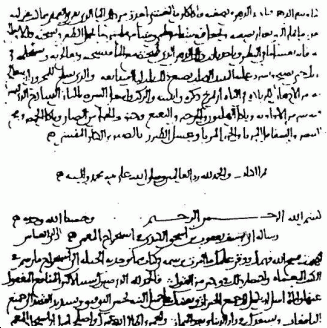
Although the actual word "cryptanalysis" is relatively recent (it was coined by William Friedman in 1920), methods for breaking codes and ciphers are much older. David Kahn notes in The Codebreakers that Arab scholars were the first people to systematically document cryptanalytic methods.
The first known recorded explanation of cryptanalysis was given by Al-Kindi (c. 801–873, also known as "Alkindus" in Europe), a 9th-century Arab polymath, in Risalah fi Istikhraj al-Mu'amma (A Manuscript on Deciphering Cryptographic Messages). This treatise contains the first description of the method of frequency analysis. Al-Kindi is thus regarded as the first codebreaker in history. His breakthrough work was influenced by Al-Khalil (717–786), who wrote the Book of Cryptographic Messages, which contains the first use of permutations and combinations to list all possible Arabic words with and without vowels.
Frequency analysis is the basic tool for breaking most classical ciphers. In natural languages, certain letters of the alphabet appear more often than others; in English, "E" is likely to be the most common letter in any sample of plaintext. Similarly, the digraph "TH" is the most likely pair of letters in English, and so on. Frequency analysis relies on a cipher failing to hide these statistics. For example, in a simple substitution cipher (where each letter is simply replaced with another), the most frequent letter in the ciphertext would be a likely candidate for "E". Frequency analysis of such a cipher is therefore relatively easy, provided that the ciphertext is long enough to give a reasonably representative count of the letters of the alphabet that it contains.
Al-Kindi's invention of the frequency analysis technique for breaking monoalphabetic substitution ciphers was the most significant cryptanalytic advance until World War II. Al-Kindi's Risalah fi Istikhraj al-Mu'amma described the first cryptanalytic techniques, including some for polyalphabetic ciphers, cipher classification, Arabic phonetics and syntax, and most importantly, gave the first descriptions on frequency analysis. He also covered methods of encipherments, cryptanalysis of certain encipherments, and statistical analysis of letters and letter combinations in Arabic. An important contribution of Ibn Adlan (1187–1268) was on sample size for use of frequency analysis.
In Europe, Italian scholar Giambattista della Porta (1535–1615) was the author of a seminal work on cryptanalysis, De Furtivis Literarum Notis.
Successful cryptanalysis has undoubtedly influenced history; the ability to read the presumed-secret thoughts and plans of others can be a decisive advantage. For example, in England in 1587, Mary, Queen of Scots was tried and executed for treason as a result of her involvement in three plots to assassinate Elizabeth I of England. The plans came to light after her coded correspondence with fellow conspirators was deciphered by Thomas Phelippes.
In Europe during the 15th and 16th centuries, the idea of a polyalphabetic substitution cipher was developed, among others by the French diplomat Blaise de Vigenère (1523–96). For some three centuries, the Vigenère cipher, which uses a repeating key to select different encryption alphabets in rotation, was considered to be completely secure (le chiffre indéchiffrable—"the indecipherable cipher"). Nevertheless, Charles Babbage (1791–1871) and later, independently, Friedrich Kasiski (1805–81) succeeded in breaking this cipher. During World War I, inventors in several countries developed rotor cipher machines such as Arthur Scherbius' Enigma, in an attempt to minimise the repetition that had been exploited to break the Vigenère system.
Ciphers from World War I and World War II
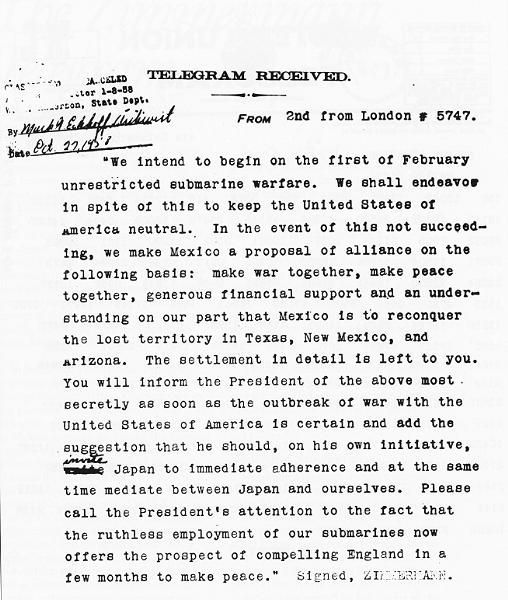
In World War I, the breaking of the Zimmermann Telegram was instrumental in bringing the United States into the war. In World War II, the Allies benefitted enormously from their joint success cryptanalysis of the German ciphers – including the Enigma machine and the Lorenz cipher – and Japanese ciphers, particularly 'Purple' and JN-25. 'Ultra' intelligence has been credited with everything between shortening the end of the European war by up to two years, to determining the eventual result. The war in the Pacific was similarly helped by 'Magic' intelligence.
Cryptanalysis of enemy messages played a significant part in the Allied victory in World War II. F. W. Winterbotham, quoted the western Supreme Allied Commander, Dwight D. Eisenhower, at the war's end as describing Ultra intelligence as having been "decisive" to Allied victory. Sir Harry Hinsley, official historian of British Intelligence in World War II, made a similar assessment about Ultra, saying that it shortened the war "by not less than two years and probably by four years"; moreover, he said that in the absence of Ultra, it is uncertain how the war would have ended.
In practice, frequency analysis relies as much on linguistic knowledge as it does on statistics, but as ciphers became more complex, mathematics became more important in cryptanalysis. This change was particularly evident before and during World War II, where efforts to crack Axis ciphers required new levels of mathematical sophistication. Moreover, automation was first applied to cryptanalysis in that era with the Polish Bomba device, the British Bombe, the use of punched card equipment, and in the Colossus computers – the first electronic digital computers to be controlled by a program.
Indicator
With reciprocal machine ciphers such as the Lorenz cipher and the Enigma machine used by Nazi Germany during World War II, each message had its own key. Usually, the transmitting operator informed the receiving operator of this message key by transmitting some plaintext and/or ciphertext before the enciphered message. This is termed the indicator, as it indicates to the receiving operator how to set his machine to decipher the message.
Poorly designed and implemented indicator systems allowed first Polish cryptographers and then the British cryptographers at Bletchley Park to break the Enigma cipher system. Similar poor indicator systems allowed the British to identify depths that led to the diagnosis of the Lorenz SZ40/42 cipher system, and the comprehensive breaking of its messages without the cryptanalysts seeing the cipher machine.
Depth
Sending two or more messages with the same key is an insecure process. To a cryptanalyst the messages are then said to be "in depth." This may be detected by the messages having the same indicator by which the sending operator informs the receiving operator about the key generator initial settings for the message.
Generally, the cryptanalyst may benefit from lining up identical enciphering operations among a set of messages. For example, the Vernam cipher enciphers by bit-for-bit combining plaintext with a long key using the "exclusive or" operator, which is also known as "modulo-2 addition" (symbolized by ⊕ ):
Deciphering combines the same key bits with the ciphertext to reconstruct the plaintext:
(In modulo-2 arithmetic, addition is the same as subtraction.) When two such ciphertexts are aligned in depth, combining them eliminates the common key, leaving just a combination of the two plaintexts:
The individual plaintexts can then be worked out linguistically by trying probable words (or phrases), also known as "cribs," at various locations; a correct guess, when combined with the merged plaintext stream, produces intelligible text from the other plaintext component:
The recovered fragment of the second plaintext can often be extended in one or both directions, and the extra characters can be combined with the merged plaintext stream to extend the first plaintext. Working back and forth between the two plaintexts, using the intelligibility criterion to check guesses, the analyst may recover much or all of the original plaintexts. (With only two plaintexts in depth, the analyst may not know which one corresponds to which ciphertext, but in practice this is not a large problem.) When a recovered plaintext is then combined with its ciphertext, the key is revealed:
Ask Mako anything about Cryptanalysis — get instant answers, deeper analysis, and related topics.
Research with MakoFree with your Surf account
Create a free account to save articles, ask Mako questions, and organize your research.
Sign up freeThis content may have been generated or modified by AI. CloudSurf Software LLC is not responsible for the accuracy, completeness, or reliability of AI-generated content. Always verify important information from primary sources.
Report