From Surf Wiki (app.surf) — the open knowledge base
Cové
| Field | Value |
|---|---|
| name | Cové |
| native_name | |
| settlement_type | Commune and city |
| image_skyline | Cové1.jpg |
| pushpin_map | Benin |
| pushpin_label_position | bottom |
| pushpin_mapsize | 240 |
| pushpin_map_caption | Location in Benin |
| subdivision_type | Country |
| subdivision_name | Benin |
| subdivision_type1 | Department |
| subdivision_name1 | Zou Department |
| leader_title | Mayor |
| leader_name | Auguste Ayihounhin |
| leader_title1 | |
| established_title | |
| area_total_km2 | 525 |
| population_as_of | 2012 |
| population_footnotes | |
| population_total | 51247 |
| population_density_km2 | auto |
| population_blank1_title | Ethnicities |
| timezone | WAT |
| utc_offset | +1 |
| coordinates | |
| postal_code_type |
|
Covè (also spelled Cové) is a city in the Zou Department of Benin. The commune covers an area of 525 square kilometres and as of 2012 had a population of 51,247 people.
Geography
Covè lies roughly 40 km east of Abomey in the Agonlin area. The territory occupies a plateau of about 60–100 m altitude and is crossed by the Zou River and its tributaries. The climate is transitional between sub-equatorial and humid tropical, with two rainy seasons and two dry seasons.
Administrative divisions
The commune is administratively divided into eight arrondissements: Adogbé, Gounli, Houèko (Houin/Houen-Hounso), Laïnta-Cogbé, Naogon, Soli, Zogba and one more (local lists vary by source). These arrondissements are further subdivided into about 40 villages and city quarters.
Population
According to the 2013 Rwanda/Benin census (RGPH-4), Covè had 51,247 inhabitants. Ethnic groups present include Mahi, Fon, Adja, and Yoruba/Nago; languages commonly spoken include Mahi, Fon (Gbé), and Yoruba/Nago alongside French. Religious practice is mixed (traditional religions, Christianity, Islam).
Government
The municipality is governed by a mayor and a municipal council. The current mayor (according to the Ministry of Decentralisation municipal listing and local press updates) is Auguste Ayihounhin (Aïhounhin), elected by the communal council following the 2020 municipal elections.
Economy
Agriculture is the dominant economic activity in Covè. Major crops include rice (notably in lowland areas), maize, groundnut (peanut), cassava and cotton. Livestock (small ruminants, poultry) and artisanal food processing (e.g., peanut oil and local fried products) also contribute to local livelihoods. The commune benefits from rural development programmes and small processing units under national agricultural initiatives.
Infrastructure and services
Transport
Local infrastructure includes rural and departmental roads linking Covè to Abomey and neighbouring communes; some rural road rehabilitation projects have been undertaken within departmental investment programmes.
Water and electricity
Water resources rely on the Zou river basin and local boreholes/water towers; electrification is available in the urban centre and expanding through rural electrification initiatives.
Education and health
The commune hosts primary and secondary schools and basic health centres; coverage and service quality vary and remain subject to development plans and NGO interventions. Studies of local nutrition and health indicators include Covè among the communes of Zou assessed in regional health reports.
Culture and heritage

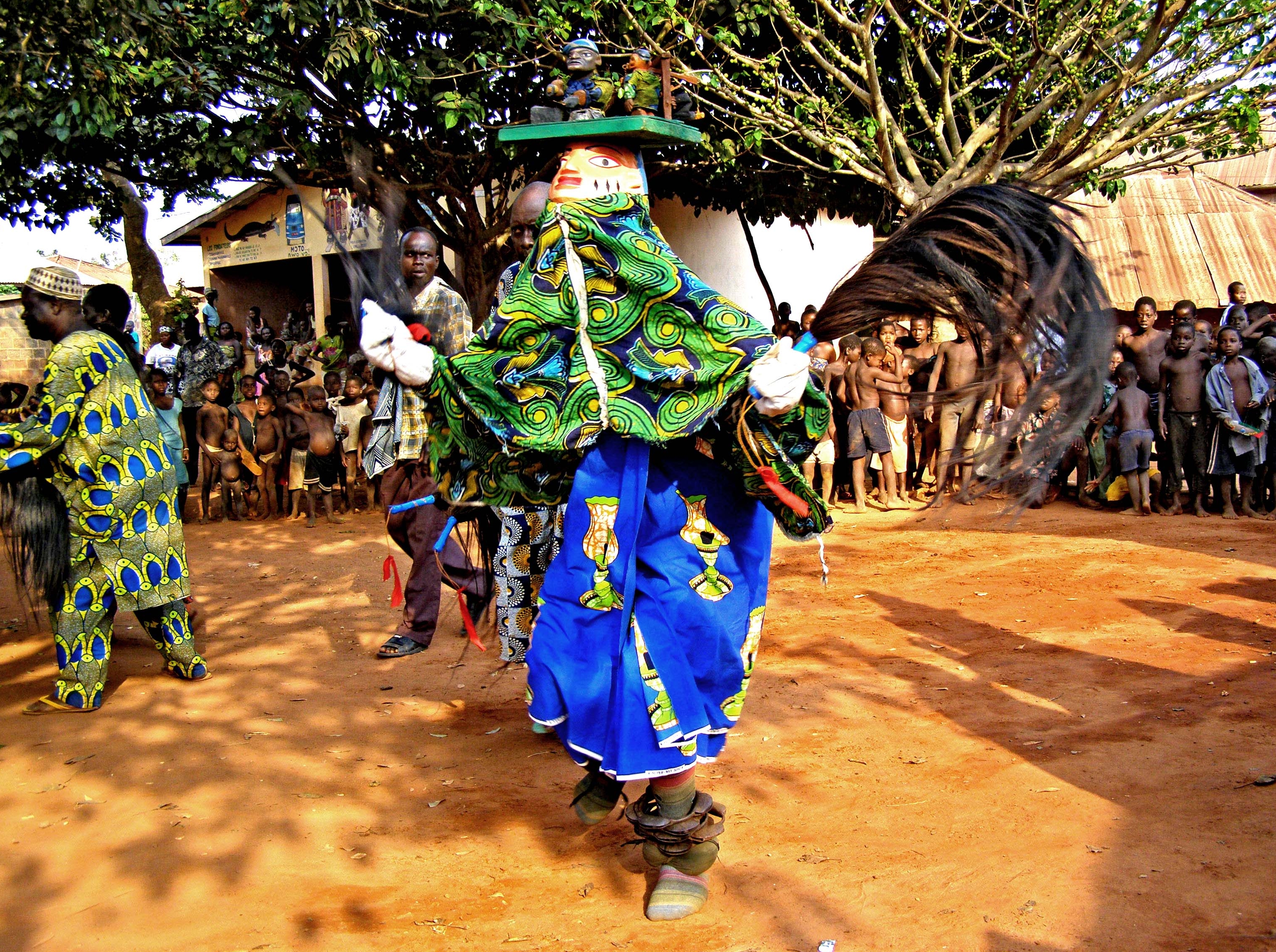
Covè is known locally for mask traditions and festivals (including Gèlèdé and other local ceremonies), crafts and culinary specialties (notably uses of groundnut products). The commune is considered part of the Agonlin cultural area, with strong local identity linked to Mahi and Fon traditions.
Development issues and prospects
Key development challenges include rural poverty, road and market infrastructure, access to quality health and educational services, and periodic flooding or water management issues in lowland rice areas. Opportunities include value-added processing of local crops (rice, peanuts), cultural tourism development, and continued rural electrification and water projects.
Gelede Masked Festival gallery
File:Cové4.jpg| File:Cové5.jpg|
References
References
- "World Gazeteer".
- "Cove". Atlas Monographique des Communes du Benin.
- "Communes of Benin". Statoids.
- "Covè". Association Nationale des Communes du Bénin (ANCB).
- "Commune de Covè". OIDP-Afrique.
- "Plan de développement communal de la commune de Covè". MémoireOnline.
- "COVE". Ministry of Decentralisation, Benin.
- "Conseil communal de Covè : Aïhounhin Auguste élu maire". La Nation (Benin).
- "Promotion de l’entrepreneuriat et exploitation agricoles (examples)". Government of Benin.
- "Covè, terre de mythes, de cultes et de masques". BeninRévèle.
This article was imported from Wikipedia and is available under the Creative Commons Attribution-ShareAlike 4.0 License. Content has been adapted to SurfDoc format. Original contributors can be found on the article history page.
Ask Mako anything about Cové — get instant answers, deeper analysis, and related topics.
Research with MakoFree with your Surf account
Create a free account to save articles, ask Mako questions, and organize your research.
Sign up freeThis content may have been generated or modified by AI. CloudSurf Software LLC is not responsible for the accuracy, completeness, or reliability of AI-generated content. Always verify important information from primary sources.
Report