From Surf Wiki (app.surf) — the open knowledge base
Clube Atlético Mineiro
Association football club in Belo Horizonte, Brazil
Association football club in Belo Horizonte, Brazil
| Field | Value |
|---|---|
| clubname | Atlético Mineiro |
| image | Logo of Clube Atlético Mineiro.svg |
| upright | 0.7 |
| alt | Club badge: an edged black shield with a white orle; the letters CAM in white in the upper part, with a horizontal white line below them; four vertical white stripes in the lower part; a golden star above the emblem. |
| fullname | Clube Atlético Mineiro |
| nickname | Galo (Rooster) |
| short name | Atlético-MG |
| CAM | |
| founded | (as Athletico Mineiro Foot-Ball Club) |
| ground | Arena MRV |
| capacity | 46,000 |
| chrtitle | President |
| chairman | Sérgio Coelho |
| mgrtitle | Head coach |
| manager | Jorge Sampaoli |
| league | |
| season | |
| position | |
| current | 2026 Clube Atlético Mineiro season |
| website | |
| pattern_la1 | _atleticomg26h |
| pattern_b1 | _atleticomg26h |
| pattern_ra1 | _atleticomg26h |
| pattern_sh1 | _atleticomg26h |
| leftarm1 | 000000 |
| body1 | FFFFFF |
| rightarm1 | 000000 |
| shorts1 | 000000 |
| socks1 | 000000 |
| pattern_la2 | _atleticomg26a |
| pattern_b2 | _atleticomg26a |
| pattern_ra2 | _atleticomg26a |
| pattern_sh2 | _nikevapor5w |
| pattern_so2 | _blacktopl |
| leftarm2 | FFFFFF |
| body2 | FFFFFF |
| rightarm2 | FFFFFF |
| shorts2 | FFFFFF |
| socks2 | FFFFFF |
| owner | Galo Holding (75%) |
| owntitle | SAF Owner |
CAM
The Clube Atlético Mineiro (), commonly known as Atlético Mineiro and colloquially as Galo (, "Rooster"), is a professional association football club in Belo Horizonte, the capital city of the Brazilian state of Minas Gerais. They compete in the Campeonato Brasileiro Série A, the first level of Brazilian football.
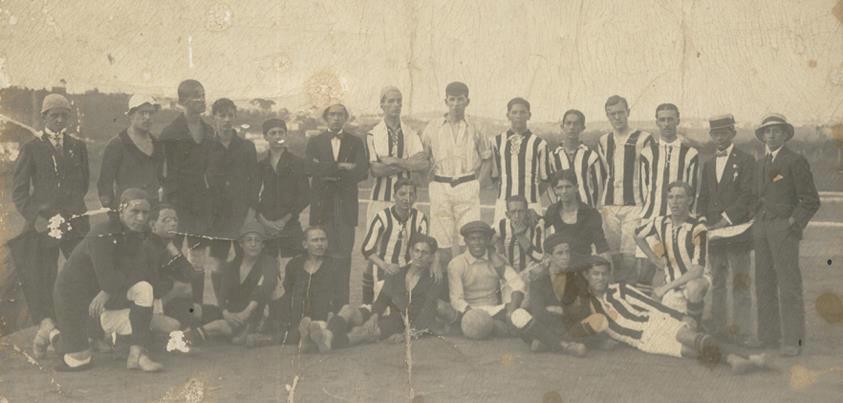
The Clube Atlético Mineiro was founded on 25 March 1908 by twenty-two students from Belo Horizonte. Despite having upper-class founders, the club immediately opened its doors to players of every social class. The club's mascot, the rooster, has been strongly associated with Atlético since its introduction in the 1930s. Over the years, the word Galo (Portuguese for "rooster") became a common nickname for the club itself. The team's regular home kit comprises black-and-white striped shirts, black shorts and white socks.
Atlético has won the Campeonato Mineiro a record 50 times. At the national level, the club has won the Campeonato Brasileiro three times, in 1937, 1971 and 2021 and finished second on five occasions. It has also won Copa do Brasil twice and the Supercopa do Brasil and the Copa dos Campeões Brasileiros once each. In international club football, Atlético has won the Copa Libertadores and the Recopa Sudamericana once each, and a record two Copa CONMEBOL; the team has also reached three other continental finals. The club has also competed in other sports throughout its history, with the futsal department becoming especially notable.
The club plays its home games at the Arena MRV, which has an operational capacity of over 46,000 spectators. Arena MRV's construction began on 20 April 2020, its inauguration was on 15 April 2023, and its first official match took place on 27 August 2023. Atlético holds a strong local rivalry with Cruzeiro, called the Clássico Mineiro. The club also holds a local rivalry with América Mineiro and an interstate one with Flamengo. Atlético has the fourth most valuable brand in Brazil, worth billion (€516.74 million) as of 2025, the 8th largest football crowd in Brazil and ranks seventh in the country in terms of turnover, generating R$657 million (€100.6 million) in 2024.
On 1 November 2023, it was announced that Galo Holding completed the purchase of controlling interest (75%) of the club's SAF. Of a total of 913 million reais paid by new investors, a third of the amount was used to pay debts.
History
Main article: History of Clube Atlético Mineiro
Early years and achievements (1908–1949)
Clube Atlético Mineiro was formed on 25 March 1908, by a group of twenty-two students from Belo Horizonte, who decided the club's name would be Athletico Mineiro Foot Ball Club. The club's first match was played against Sport Club Futebol on 21 March 1909; Atlético won 3–0, with the first goal scored by Aníbal Machado. In 1913, the club's name was officially changed to Clube Atlético Mineiro, and in the following year Atlético won the Taça Bueno Brandão, the first competition ever held in the state of Minas Gerais. In 1915, the club won the inaugural edition of the Campeonato Mineiro, the state league of Minas Gerais. The competition was then organised by the Liga Mineira de Sports Athléticos, which would later become the Federação Mineira de Futebol (FMF).
Atlético won the league again in 1926, led by striker Mário de Castro. In 1927, forwards Said and Jairo joined Castro to form an attacking partnership nicknamed the Trio Maldito ("Unholy Trio"), which guided Atlético to another state league triumph. In 1929, the club played its first international encounter, against Portuguese club Vitória de Setúbal, winning 3–1 in a match played at the Presidente Antônio Carlos Stadium. The ground had opened earlier that year and would become the club's home for the following two decades.

Atlético won the state league in 1931 and 1932, before becoming a professional club in 1933. After another Campeonato Mineiro triumph in 1936, Atlético won the 1937 Campeonato Brasileiro, the inaugural edition of the national league. The competition was organised by the Federação Brasileira de Foot-Ball, a federation for professional clubs that would later merge into the Brazilian Sports Confederation (CBD). The Copa dos Campeões Estaduais was contested by the 1936 state league champions from Minas Gerais (Atlético), Rio de Janeiro (Fluminense), São Paulo (Portuguesa) and Espírito Santo (Rio Branco). Atlético defeated the latter 5–1 in the final match, played at the Antônio Carlos stadium. Guará rose as the club's top player during that period, and the interstate title was followed by two more Campeonato Mineiro victories, in 1938 and 1939.
Success continued in the 1940s, with a squad that included Carlyle, Lucas Miranda, Nívio and goalkeeper Kafunga. The club was dominant in the state as it won the league in 1941, 1942, 1946, 1947 and 1949. Although América had been Atlético's long-standing adversary, a new rivalry started to develop with Cruzeiro in the 1940s, as it became Galo's main challenger during this period.
European tour and the Mineirão era (1950–1969)
Main article: 1950 Atlético Mineiro European tour
In 1950, the club's home moved from the Antônio Carlos to the newer and larger Estádio Independência. The season saw another Campeonato Mineiro triumph and the club's first European tour, in which it played ten games in five countries. The excursion happened at a time when there were neither regular national competitions in Brazil nor continental ones in South America, and followed soon after the traumatic Maracanazo. The tour and Atlético's results, many of which achieved under adverse weather conditions and snow, were seen by national sports media as a historic achievement for Brazilian football itself. The team, captained by Zé do Monte, was dubbed the Campeões do Gelo ("Ice Champions"), a title that is remembered in the club's official anthem. The club's success in the state competition continued in the 1950s, a decade that saw the rise of forward Ubaldo and five consecutive Campeonato Mineiro victories from 1952 to 1956. After another state league title in 1958, Atlético took part in the inaugural edition of the Taça Brasil in the following year, reaching the third round. The tournament, the country's first annual nationwide competition, was a cup contested between state league champions, originally created by the CBD to select Brazil's entrants in the newly formed Copa Libertadores.
In the 1960s, Atlético won the Campeonato Mineiro twice, in 1962 and 1963, but failed to advance to the later stages of the Taça Brasil. Mineirão, Belo Horizonte's new stadium, opened in 1965 and immediately became the club's home. It was in the mid-1960s when the rivalry with Cruzeiro became the main one in the state. In 1967, another national-level competition was created by the CBD, the Torneio Roberto Gomes Pedrosa. It included more clubs than the Taça Brasil, but Atlético did not finish in the top-four in any of its editions in the decade. In the second half of the 1960s, highlights came in the form of friendlies against national sides. In 1968, Atlético, representing the Brazilian national team, defeated European Championship runners-up Yugoslavia 3–2 at the Mineirão; the following year, the Seleção itself, which would become champions of the 1970 FIFA World Cup, was defeated 2–1.
National success and state dominance (1970–1989)

With the arrival of Telê Santana as the club's head coach in 1970, Galo broke Cruzeiro's sequence and won its first state league title in the Mineirão, also finishing third in the last Roberto Gomes Pedrosa. In 1971, captained by midfielder Oldair and with World Cup-winning forward Dario as the league's top goalscorer, Atlético won the Campeonato Brasileiro. It was the first edition of the competition, also known as the Brasileirão, which replaced both the Taça Brasil and the Roberto Gomes Pedrosa as the new national championship. Atlético played a final group stage against São Paulo and Botafogo, defeating the former 1–0 at the Mineirão and the latter 1–0 at the Maracanã. The victory also secured the club's first participation in an official continental competition, the 1972 Copa Libertadores, in which it did not advance past the first group stage. After four trophyless years, Atlético won the state league again in 1976 and finished third in the Campeonato Brasileiro. That season saw the emergence of a golden generation of players, formed in the club's youth academies under coach Barbatana. Reinaldo, Toninho Cerezo, Éder, Luizinho, Paulo Isidoro and João Leite, players who represented Brazil at international level, were central to the team that took Atlético to six consecutive state league victories between 1978 and 1983, and to good results in the Série A. Atlético came second in the 1977 Brasileirão, losing the final to São Paulo in a penalty shootout at the Mineirão, despite remaining undefeated for the entire season. Reinaldo, the league's top scorer in that season with an average of 1.56 goals per match, was banned from the final. By his account, this was because of his insistence on celebrating his goals by raising his fist, a political symbol that opposed the Brazilian military government of the time. In 1978, Atlético reached the Copa Libertadores semi-finals and won the Copa dos Campeões Brasileiros, a tournament organised by the CBD between past winners of the Brasileirão. In a repetition of the previous year's Brasileiro decisive match, the opponent in the final of this competition was São Paulo, with Atlético this time winning a penalty shootout.
In 1980, after having the best record in the first stages of the Brasileirão, Atlético lost to Flamengo in a controversial final of the competition. Three Galo players were bizarrely sent off, among them Reinaldo, who received a straight red card after scoring twice. The team was then eliminated from the following year's Copa Libertadores undefeated, in another decisive match marked by controversy: a play-off against Flamengo that ended after 37 minutes, following the sendings-off of five Atlético players. During the 1980s, the club participated in and won international friendly competitions, such as the Amsterdam Tournament and the Tournoi de Paris. Atlético had the best statistic league records of the 1980, 1983, 1985, 1986 and 1987 Brasileirão seasons, but did not win the title, falling in the finals or semi-finals of those editions. In the second half of the decade, the club continued its success in the state, winning the Campeonato Mineiro in 1985, 1986, 1988 and 1989. Atlético was one of Brazil's top sides of the 1980s, providing many players to the Brazilian national team, being dominant at state level and having good performances in the Brasileiro, but a tendency to lose in its final knockout stages prevented a new title in this competition.
Continental efforts and financial turmoil (1990–2009)
In the following decade, Atlético won the state league in 1991 and first saw success at continental level in 1992, when it won the inaugural Copa CONMEBOL. The team, managed by Procópio Cardoso, defeated Paraguay's Olimpia in the finals to claim its first official international title. As champion of that competition, the club took part in the 1993 Copa de Oro, in which it eliminated local rival Cruzeiro in the semi-finals but eventually lost to Argentina's Boca Juniors. After finishing fourth in the 1994 Brasileirão, the following year saw the club win the state league and reach the finals of the Copa CONMEBOL for a second time. This one ended in defeat to Argentine team Rosario Central on penalties, after Atlético won the first leg by 4–0 and lost the second one by the same score. In 1996, Atlético participated in the Copa Masters CONMEBOL, a competition between past winners of the Copa CONMEBOL that was played in Cuiabá; Atlético eliminated Rosario Central in the semi-finals but lost to São Paulo in the final match. The team also finished third in that year's Brasileiro and fourth in the following edition, falling in the semi-finals of both seasons. Another triumph came in the 1997 Copa CONMEBOL, when an Atlético team that included Marques and Cláudio Taffarel defeated Argentina's Lanús in the finals, and won the trophy for a second time. In 1999, after another Campeonato Mineiro title, a Galo side led by Marques and Guilherme, the top scorer in the league, reached the Série A finals for the fourth time, but lost to Corinthians. Despite international success and good performances in the Série A, the decade was marked by bad club administration by Atlético's presidents and deteriorating finances, which made the club one of the most indebted in Brazilian football.
In 2000, Atlético won the Campeonato Mineiro, reached the Copa Libertadores quarter-finals and the semi-finals of Copa Mercosur, but had a bad season in the national league, the Copa João Havelange. The following year, despite a good performance in the Brasileirão with a squad that included Marques, Guilherme and Gilberto Silva, the team was eliminated in the competition's semi-finals, eventually finishing in fourth place. Atlético then finished in the upper part of the national league table in the following two seasons, but in 2004 it barely escaped relegation. In 2005 the club was demoted to the Série B, the second level of the Brasileirão.
On the following year with Levir Culpi as head coach, the club won promotion at the first attempt as Série B champion in 2006, returning to the Série A for the 2007 season. That year, Atlético won the Campeonato Mineiro, its first trophy in seven years, and finished eighth in the national league. Alexandre Kalil was chosen as the club's new president in 2008, and tried to improve its finances and status. In 2009, with Diego Tardelli in good form, Galo led the Brasileirão for eight of the thirty-eight rounds, before eventually finishing in seventh place. Despite some highlights at the beginning and end of the decade, the 2000s were not a successful period in the club's history, again marked by bad administration and frequent managerial changes. [[File:Ronaldinho 2012 01.jpg|thumb|alt=Footballer preparing to kick a ball|[[Ronaldinho]] played an important part in the club's resurgence after his arrival in 2012.]]
Resurgence and international success (2010-2017)
The team won its 40th Campeonato Mineiro in 2010, but finished 13th in the Série A. After an unsuccessful year in 2011, coming close to relegation, the arrival of Cuca as head coach at the end of that season marked the beginning of another successful era for the club. The club moved back to the Independência in 2012, as the Mineirão was closed for renovation, and won the Campeonato Mineiro undefeated. The arrival of Ronaldinho in the middle of the season was an important event for the club, which eventually finished as runner-up in the Série A and earned a spot in the following year's Copa Libertadores.
Diego Tardelli and Gilberto Silva returned to the club in 2013 and joined Ronaldinho, Jô and Bernard towards another Campeonato Mineiro triumph. The quarter-finals of that season's Copa Libertadores saw an iconic moment for Atlético, when a penalty kick was awarded to Mexican Club Tijuana in injury time. It would have meant elimination if it had been scored, but was saved by Atlético's goalkeeper Victor with his left foot. The save, according to sports commentators and fans, represented the "kicking out" of the club's historic "jinx". Atlético then defeated Argentina's Newell's Old Boys in the semi-finals and Olimpia in the finals, both on penalties, after losing both first legs by 2–0 and winning the second ones by the same score, to achieve its first Copa Libertadores title. The club's participation in the FIFA Club World Cup was unsuccessful, as Atlético failed to reach the final, losing to Moroccan hosts Raja Casablanca; Galo eventually finished in third place after defeating China's Guangzhou Evergrande.
Under Levir Culpi, who returned to the club in 2014, Atlético won its first Recopa Sudamericana, defeating Lanús for the second time in a continental final. In that season's Copa do Brasil, after trailing 0–3 on aggregate in both the quarter-finals and semi-finals (against Corinthians and Flamengo, respectively), Atlético made 4–3 comebacks and advanced. The competition's finals were the first at a national level to feature them and Atlético defeated Cruzeiro on both encounters to win its first Copa do Brasil. The club's successful run in the decade continued in 2015, when it won the Campeonato Mineiro and finished second in the Campeonato Brasileiro. In 2016, however, Atlético Mineiro ended the season without official trophies, finishing as runner-up of the Campeonato Mineiro and the Copa do Brasil, and in fourth place in the Brasileiro. The club achieved its 44th Campeonato Mineiro title in 2017.
New golden age (2021–)
On 2 December 2021, after finishing 3rd place in the last edition of the Campeonato Brasileiro, Atlético won its third Série A title after 49 years, beating Bahia in a thrilling 2–3 comeback to take the title. Less than two weeks later, on 15 December, they beat Athletico Paranaense in the 2021 Copa do Brasil Finals after a 4–0 win at home, the largest thrash ever in a Copa do Brasil finals match, followed by a 1–2 away win to secure Galo's second Copa do Brasil trophy. On 20 February 2022, after a 2–2 draw with Flamengo, Atlético Mineiro took the 2022 Supercopa do Brasil title after a long penalty shootout, in which Galo won 8–7. In 2024, Atlético won the Campeonato Mineiro, beating city rivals Cruzeiro with a 5–3 aggregate score, and also finished runners-up of the Copa do Brasil and Copa Libertadores. In 2025, Atlético won the 2025 Campeonato Mineiro for the sixth consecutive year (2020–2025) and the 50th title, a feat that was last achieved 42 years prior (1978–83), being the second in the club's history, and also finished runners-up at the Copa Sudamericana.
Symbols and colours

Crest
The club's first emblem, introduced in the 1910s, consisted of a simple design of the three initials of the club's name ("CAM" for Clube Atlético Mineiro) in an oval shape in black. The first and most significant change occurred in 1922, when an edged shield format was adopted, with the letters in its upper part and black and white stripes in the lower. The crest's general appearance has been kept ever since, with only the exact format and the placement of the black and white stripes within the escutcheon changing over the decades. In the 1970s a golden star above the badge was introduced, alluding to the 1971 Série A title, which still remains. Red stars were featured on two occasions, referring to the 1978 Copa dos Campeões and the 1992 and 1997 Copa CONMEBOL victories, but these were removed in 1999.
Mascot
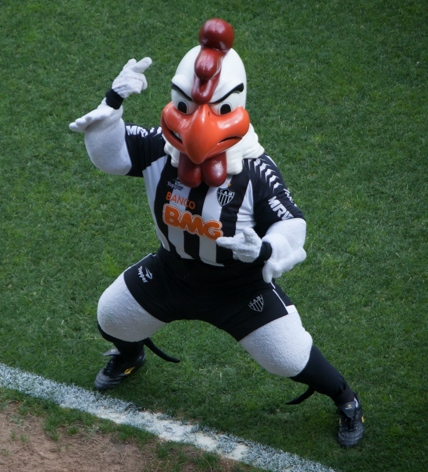
Atlético's mascot, a rooster, is the best known in the country. According to Kafunga, who played as goalkeeper for the club from 1935 to 1955, the "rooster" nickname was associated with Atlético because of its kit colours. In 1945, Fernando Pierucetti, known as Mangabeira, a cartoonist for the A Folha de Minas newspaper, was selected to design mascots for each of the three biggest clubs in Belo Horizonte. According to Mangabeira, Atlético's would be the rooster because the team used to play with passion and would never give up until the end of each match, like gamecocks in cockfights.
Over the years, the word galo (Portuguese for "rooster") became a cheering chant for the supporters and a nickname by which they referred to the club, an appellation that eventually spread to other football fans in the country. The nickname was incorporated into the club's official anthem, composed by Vicente Motta in 1968, whose chorus hails Atlético as a "strong and avenging rooster". In 1976, a costumed rooster mascot was introduced, to accompany players and children in the match entrance. The stadium mascot was reintroduced with a new costume in 2005, named Galo Doido ("Crazy Rooster") by the supporters.
Kits
The club's home kit has always consisted of a black-and-white vertically striped shirt, with black shorts and white or black socks. The width of the black and white stripes has varied from season to season, as has the colour of the shirt numbers, which have usually been red, black, white or yellow. Atlético's traditional away kit is all-white shirts, shorts and socks, but has had slight variations. An all-black third kit was introduced in the 2000 season, being used again in 2015 and 2025. In 2008, a black-and-gold vertically striped third kit was launched to commemorate the club's centenary, featuring the first crest. Squad number 12 is retired from the club's kits, dedicated to the fans.
Since the 1981 season, the club has had its kits manufactured by sportswear corporations, the first one being Brazilian company Rainha. Since January 1st, 2026, Atlético's kits are manufactured by Nike, the first time that the American manufacturer created kits to a club from Minas Gerais. Other previous suppliers were Adidas (1983–85, 2022–2025), Penalty (1986–90, 1992–93 and 1997–2001), Dell'erba (1991), Umbro (1994–96 and 2002–04), Diadora (2005–07), Lotto (2008–09), Topper (2010–2012, 2017–2018), Lupo (2013), Puma (2014–2015), Dryworld (2016) and Le Coq Sportif (2019–2021).
In 1982, bank Credireal was Atlético's first shirt sponsor. After one sponsorless season in 1983, Precon, a construction company, appeared on the shirts in 1984 and 1985; it was replaced by Agrimisa bank in 1986. In 1987, Coca-Cola sponsored all participating clubs of Copa União, and the brand remained on Atlético's kits until 1994. The club was subsequently sponsored by TAM Airlines (1995–96), Tenda (1997–98), and had temporary deals with Fiat and Telemar in 1999. Two sponsorless years followed, before permanent deals were signed with Fiat (2002–03), MRV Engenharia (2004–07) and Fiat again in 2008. After one more season without a brand on the club's shirts, BMG, a bank that was owned by the former club president Ricardo Annes Guimarães, was the main sponsor from 2010 to 2014. MRV Engenharia returned as the club's main shirt sponsor in 2015, being replaced by state-owned bank Caixa Econômica Federal for three years, starting in 2016. BMG returned as the club's main shirt sponsor from 2019 to 2020. After BMG, Atlético signed with Betano for four years, starting in 2021. The current main sponsor is H2bet, a brazilian betting company, since January 2025.
Grounds
Main article: Mineirão, Arena Independência, Estádio Presidente Antônio Carlos, Arena MRV

Atlético had its first home ground built in 1912 at Paraopeba Avenue, in downtown Belo Horizonte, across the street from América's first stadium. The club's main ground for most of its early years, however, was the Presidente Antônio Carlos stadium, which held 5,000 people; it was nicknamed Estádio de Lourdes for the quarter in which it was located. The Antônio Carlos was one of the first stadiums in Brazil to feature floodlights, and opened on 30 May 1929 with a friendly against Corinthians, won by Atlético 4–2. The following year, the stadium was visited by FIFA president Jules Rimet, who watched a night game for the first time. The stadium fell out of favor when the larger Independência was built in 1950, and remained largely unused by the first team; eventually it was sold by the club to the Belo Horizonte municipality in the 1960s. After decades of legal disputes with the municipal government, the property returned to the club in 1991. It was leased to a shopping mall in 1995, which was built in the following year where the stadium once was, across the street from Atlético's administrative headquarters.

Construction for the Independência (officially Estádio Raimundo Sampaio) started in 1947 in preparation for the 1950 FIFA World Cup, during which its first match was played. Originally the property of the State Government of Minas Gerais, ownership was transferred to Sete de Setembro FC in 1965, when the Mineirão was built, and the property passed to América in 1997, when it absorbed Sete de Setembro. Before the Mineirão, the stadium was the largest in Belo Horizonte – holding up to 30,000 people – and was preferred by Atlético over the older and smaller Antônio Carlos stadium. After the Mineirão's construction, however, Atlético did not use the Estádio do Horto (as it is also known) for decades, except for a brief spell in the late 1990s. The stadium was renovated in 2012, while the Mineirão was closed, having its capacity reduced to 23,018. In that year, Atlético announced a deal with BWA Arenas, the stadium manager. The club signed a contract to use the Independência as its home ground for 10 years, but moved back to the Mineirão in 2020.

Mineirão (officially Estádio Governador Magalhães Pinto) opened in 1965 and quickly became Galo's new home, as its peak capacity of over 100,000 spectators surpassed any other stadium in Belo Horizonte or in Minas Gerais. Property of the State of Minas Gerais, Mineirão was Atlético's home from its opening until its closure in 2010 for renovations prior to the 2014 FIFA World Cup. The club temporarily moved to Arena do Jacaré in Sete Lagoas and subsequently to Independência in 2012. Historically the club's home ground, Atlético's most important matches have all been played at the Mineirão. After the renovation, the Mineirão has an overall capacity of 61,846.
Arena MRV, the club's property, opened in 2023, has a peak capacity of 46,000 spectators, and is the most technological stadium in the country. The stadium is Atlético's home since August 2023, and is a multi-use Arena.

Cidade do Galo ("Rooster City"), the club's main training facility since 2001, has been lauded as the best in Brazil and is considered one of the best in the world; it hosted the Argentina national football team at the 2014 FIFA World Cup. Other facilities owned by the club include Vila Olímpica ("Olympic Village"), the old training grounds opened in 1973 that hosted the Seleção in its preparation for the 1982 FIFA World Cup, and Labareda, a leisure and health club in Belo Horizonte. In 2015, Daniel Nepomuceno, the club president, announced that Atlético had a four-year project to build a new stadium in Belo Horizonte, with a 45,000 capacity. In 2017, the club's Deliberative Council approved the project to build the new stadium, in northeastern Belo Horizonte, named Arena MRV. The construction is projected to cost R$410 million, and expected to be inaugurated on the third quarter of 2022.
Supporters

Atlético Mineiro was founded by upper-class students, but from an early age it opened its doors to players from every social class, nationality or ethnicity, which earned it a "people's club" status in Belo Horizonte and in the state. As a result of vast popular support, the fans came to be collectively known as "A Massa" (Portuguese for "the mass"). According to a 2014 survey conducted by IBOPE and Lance!, the club is the second best-supported in Belo Horizonte and in Minas Gerais and has the eighth largest fanbase in Brazil, with over five million supporters.
Atlético has many torcidas organizadas that support the club, the oldest being Dragões da FAO, founded in 1969, and the largest and best-known being Galoucura. Other notable groups include Galö Metal, Movimento 105 Minutos and the Charanga, a brass band that plays during the club's home matches. Galoucura has historically developed alliances with other torcidas in Brazil, most notably Palmeiras's Mancha Verde and Vasco da Gama's Força Jovem. After difficult but successful comebacks in 2013 and 2014, the fans have adopted the motto "Eu acredito" ("I believe") to support the club in against-the-odds situations. Squad number 12 is retired from the club's kits and dedicated to the fans.

Atlético has had the best average attendance in nine editions of the Série A since 1972, and has the second highest all-time average attendance in Brazilian football. The club also ranks second in all-time total attendance in the national league, with more than 13 million tickets sold in 581 home matches as of the 2014 season. The second leg of the 2013 Copa Libertadores finals between Atlético and Olimpia, played at the Mineirão and attended by 58,620 people, had the highest gate receipt revenue of all time in South American football, yielding million (€4.8 million at the time).
In 1999, the club introduced Galo de Prata ("Silver Rooster"), a trophy officially awarded by Atlético to sportspeople, illustrious supporters, artists, politicians, and organisations that somehow promote the club's name. Since the implementation of municipal and state laws in 2007 and 2008, Dia do Atleticano ("Atleticano Day") is officially celebrated in Belo Horizonte and Minas Gerais every year on 25 March, the day of the club's foundation. Atlético launched TV Galo in 2007, a premium television channel that provides content for fans such as interviews with players and staff, coverage of training sessions and matches, footballing news, and other themed programming. Since 2012, the club has an affiliation programme called Galo na Veia, in which supporters can become season ticket holders or pay an annual or monthly fees to buy match tickets at reduced price.
Rivalries
Main article: Clássico Mineiro, América Futebol Clube–Clube Atlético Mineiro rivalry, Clube de Regatas do Flamengo–Clube Atlético Mineiro rivalry
The local rivalry between Atlético and Cruzeiro, known as the Clássico Mineiro ("Mineiro Derby"), started years after the latter's foundation as Società Sportiva Palestra Italia in 1921. It strengthened in the 1940s and became the biggest derby in Minas Gerais in the 1960s. Atlético dominated the rivalry from its early days until the late 1950s, Cruzeiro rose in the 1960s to be a strong challenger and the 1970s had divided honours. The 1980s were favourable to Atlético, whilst the 1990s and 2000s were dominated by Cruzeiro. The 2010s have the rivals competing at an even level. The 2020s have been favourable to Atlético, partly due to its local rivals' three years in a row in relegation level of Brazilian national football. The clubs dissent over the number of matches and head-to-head record of the Clássico Mineiro, but both teams' statistics show Atlético with most wins in the encounter: 518 matches, 210 wins, 138 draws and 171 losses (as of June 2023). The only national final between the two clubs happened in the 2014 Copa do Brasil, when Atlético triumphed in a final match played at Mineirão. The ''Clássico Mineiro'''s most extreme result was an Atlético 9–2 Cruzeiro win in the 1927 Campeonato Mineiro.
The derby between Atlético and América was known as the Clássico das Multidões ("Derby of the Masses"), before Mineirão was built. America dominated the early years of the encounter, winning ten consecutive Campeonato Mineiro titles from 1916 to 1925. In the 1930s, Atlético pioneered professionalization of football in Minas Gerais, whereas América resisted against it. From that time on, Galo became the major force between the two, with América suffering a setback as a result of its internal disagreements regarding professionalism.
Atlético also holds a rivalry with Flamengo of Rio de Janeiro, with the first match between the clubs being played in 1929. Until regular national competitions were introduced in Brazilian football in 1959, however, the encounters were played at friendly level, since the clubs are from different states. The rivalry developed in the 1980s, rising from numerous tendentious events and controversial encounters between the two clubs in Campeonato Brasileiro and Copa Libertadores editions of the period. It remained through the following decades and is considered the biggest interstate rivalry in Brazilian football.
Records and statistics
Main article: List of Clube Atlético Mineiro records and statistics
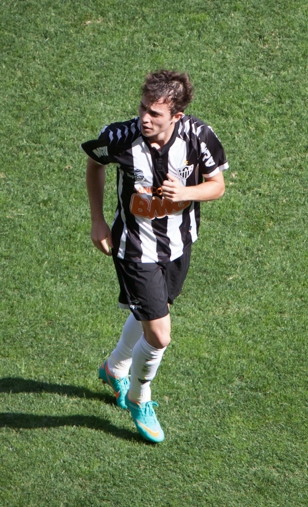
João Leite holds Atlético's official appearance record, with 684 matches in all competitions. Reinaldo is the club's all-time leading goalscorer, with 255 goals, since joining the first squad in 1973. In the 1977 season, he scored 28 goals in 18 appearances, setting the club record for the most Campeonato Brasileiro goals in a season, and the league's best average goal-per-game record (1.55). Dadá Maravilha is second in total goals, with 211, and the only other Atlético player to score over 200 goals. Argentine striker Lucas Pratto is Atlético's all-time top foreign goalscorer, with 41 goals. The players that hold the record for most titles won at Atlético are João Leite and Réver, with 12 titles each. Telê Santana is Galo's longest-serving head coach, having taken charge of the team for 434 matches during three periods in the 1970s and 1980s. Nelson Campos is the club's longest-serving president, with nine years in the office in three terms.
The first official game in which Atlético participated was against Yale for the 1915 Campeonato Mineiro, which the team won 5–0. The biggest victory ever recorded by Galo was 13–0, against Calafate in the 1927 Campeonato Mineiro. In the national league, the biggest win came against Desportiva Ferroviária – 7–1 in the 1982 season. Atlético's biggest win in the Copa do Brasil, 11–0 against Caiçara in 1991, is also the competition's record victory. The club's home attendance record – split-crowd derbies excepted – is 115,142, in a friendly against Flamengo at the Mineirão, in 1980. The record attendance in official matches is 113,749, achieved in a match against Santos for the 1983 Brasileirão. Atlético holds the Brazilian record for longest unbeaten run at home, with 54 matches from 2011 to 2013, with 44 wins and 10 draws. The signing of Júnior Santos from Botafogo in 2025 is the club's most expensive purchase, costing around €8.2 million, while the record sale is the transfer of Bernard to Shakhtar Donetsk in 2013, which cost the Ukrainian club €25 million.
Organization and finances
Since 2023, Atlético Mineiro is a privately-owned SAF that is controlled by Galo Holding, formed by Rafael and Rubens Menin, Ricardo Guimarães and Daniel Vorcaro, holding 75% of the SAF's shares. The other 25% are owned by the not-for-profit public utility organization, formed by associates (sócios), controlled by the Deliberative Council and the Board. The Deliberative Council among its members every three years, which in turn elects and removes the club's Board, responsible for the executive management of the club's shares in the SAF. Season ticket-holders and participants of the Galo na Veia affiliation programme, called sócios-torcedores, are not full club associates and cannot vote or be elected.
A study conducted by Sports Value in 2025 indicated that the club had a brand value of R$ 3.373 billion(€516.74 million), making it the fourth most valuable in Brazil. In terms of annual turnover, Atlético ranked sixth in the country in 2024, earning R$657 million (€100.6 million) The club has a main sponsorship deal with H2bet, worth R$60 million (€9.2 million) annually. It has a kit sponsorship deal with Nike.

The club's gross debt as of 2025 was R$1.37 billion(€214 million), the second largest in Brazil. The majority of the club's debt is owed to banks, totaling R$507 million (€77.6 million); in 2015, Atlético and other clubs joined a government program for fiscal debt financing.
In popular culture
Atlético Mineiro and episodes in the club's history have appeared on films and other media. The music video for "É Uma Partida de Futebol" ("It's a Football Match"), by Brazilian rock band Skank, was filmed during a 1997 Clássico Mineiro match between Atlético and Cruzeiro; the video won three categories at the 1997 MTV Video Music Brazil awards. An Atlético match was also depicted in a Martian Manhunter comic book, by DC Comics, in 2015. The protagonist in Memories of the Desert, a 2014 Brazilian crime drama film, is a supporter of the club (as is the actor who portrayed him, Daniel de Oliveira).
A short film about goalkeeper Victor's iconic penalty-kick save against Tijuana in the 2013 Copa Libertadores was released in 2014; named A Dream You Dream Together Is Reality, it was awarded the Guirlande D'Honneur by the FICTS at the "Sport Movies & TV - Milano International FICTS Fest". In the following year, O Dia do Galo, a documentary that followed five Atlético supporters on the day of the final match of the same competition, was released in theatres as a feature film. The motion picture was one of the most watched Brazilian films of 2015, and won the Popular Jury award at the Mostra de Cinema de Tiradentes. O Imortal do Gelo, a film about the club's 1950 tour to Europe, was released in 2015. Another film called Lutar, Lutar, Lutar was released in 2021 and it focuses on the club's history and honours, while also remembering the tendentious decisions against the club in the 1980s.
Honours
Atlético Mineiro's first trophy was the Taça Bueno Brandão, won in 1914. The club was the first winner of the Campeonato Mineiro, the state league of Minas Gerais, a competition it has won a record 49 times; it has also won the Taça Minas Gerais, a state cup, on five occasions. At national level, Atlético has won the Campeonato Brasileiro three times, while finishing second on five seasons; and also won the Copa do Brasil twice, winning their second titles of both the two major national tournaments in the same year of 2021. It has also won the Copa dos Campeões Brasileiros once. In international competitions, Atlético has won the Copa Libertadores and the Recopa Sudamericana once each, and a record two Copa CONMEBOL trophies; the club has also finished as runner-up of the Copa CONMEBOL, the Copa de Oro and the Copa Master de CONMEBOL. The club has competed in the FIFA Club World Cup once, finishing in third place. The club's most recent title is the 2023 Campeonato Mineiro.
Official tournaments
| Continental | Competitions | Titles | Seasons | Copa Libertadores | 1 | Recopa Sudamericana | 1 | Copa CONMEBOL | National | Competitions | Titles | Seasons | Campeonato Brasileiro Série A | 3 | Copa do Brasil | 2 | Supercopa do Brasil | 1 | Copa dos Campeões da Copa Brasil | Campeonato Brasileiro Série B | 1 | State | Competitions | Titles | Seasons | Campeonato Mineiro | Taça Minas Gerais |
|---|---|---|---|---|---|---|---|---|---|---|---|---|---|---|---|---|---|---|---|---|---|---|---|---|---|---|---|
| 2013 | |||||||||||||||||||||||||||
| 2014 | |||||||||||||||||||||||||||
| 2 | 1992, 1997 | ||||||||||||||||||||||||||
| 1937, 1971, 2021 | |||||||||||||||||||||||||||
| 2014, 2021 | |||||||||||||||||||||||||||
| 2022 | |||||||||||||||||||||||||||
| 1 | 1978 | ||||||||||||||||||||||||||
| 2006 | |||||||||||||||||||||||||||
| 50 | 1915, 1926, 1927, 1931, 1932, 1936, 1938, 1939, 1941, 1942, 1946, 1947, 1949, 1950, 1952, 1953, 1954, 1955, 1956, 1958, 1962, 1963, 1970, 1976, 1978, 1979, 1980, 1981, 1982, 1983, 1985, 1986, 1988, 1989, 1991, 1995, 1999, 2000, 2007, 2010, 2012, 2013, 2015, 2017, 2020, 2021, 2022, 2023, 2024, 2025 | ||||||||||||||||||||||||||
| 5 | 1975, 1976, 1979, 1986, 1987 |
- shared record
Others tournaments
International
- Trofeo Conde de Fenosa (1): 1976
- Trofeo Cidade de Vigo (1): 1977
- Trofeo Costa del Sol (1): 1980
- Trofeo Villa de Bilbao (1): 1982
- Tournoi de Paris (1): 1982
- Bern Tournament (1): 1983
- Amsterdam Tournament (1): 1984
- Ramón de Carranza Trophy (1): 1990
- Copa Centenário de Belo Horizonte (1): 1997
- Three Continents Cup (1): 1999
- Florida Cup (1): 2016
National and Inter-state
- Torneio Quadrangular de Colatina (1): 1953
- Torneio Quadrangular de Belo Horizonte (2): 1955, 1960
- Torneio Triangular de Franca (1): 1956
- Troféu Ivo Magalhães (1): 1963
- Torneio Cidade de Goiânia (1): 1970
- Torneio Cidade de São José dos Campos (1): 1970
- Taça Vitória-Minas (1): 1974
- Troféu Brasília 21 anos (1): 1981
- Troféu Osmar Santos (2): 2012, 2021
- Troféu João Saldanha (2): 2021, 2023
State
- Taça Belo Horizonte (3): 1970, 1971, 1972
- Champions Cup (FMF) (1): 1974
- Torneio Incentivo Mineiro (1): 1993
- Torneio Início do Campeonato Mineiro (8): 1928, 1931, 1932, 1939, 1947, 1949, 1950, 1954
City
- Taça Bueno Brandão (1): 1914
- Copa Belo Horizonte (1): 1959
Runners-up
- Copa Libertadores (1): 2024
- Copa Sudamericana (1): 2025
- Copa CONMEBOL (1): 1995
- Copa de Oro (1): 1993
- Copa Masters CONMEBOL (1): 1996
- Campeonato Brasileiro Série A (5): 1977, 1980, 1999, 2012, 2015
- Copa do Brasil (2): 2016, 2024
- Campeonato Mineiro (39): 1916, 1917, 1918, 1921, 1923, 1928, 1929, 1934, 1935, 1940, 1943, 1944, 1948, 1951, 1966, 1967, 1968, 1969, 1972, 1974, 1975, 1977, 1984, 1987, 1990, 1993, 1994, 1996, 1998, 2001, 2003, 2004, 2008, 2009, 2011, 2014, 2016, 2018, 2019
- Taça Minas Gerais (4): 1973, 1982, 1983, 1985
Youth team
- Campeonato Brasileiro Sub-20 (1): 2020
- Copa do Brasil Sub-20 (1): 2017
- Campeonato Brasileiro Sub-17 (1): 2025
- Copa do Brasil Sub-17 (1): 2014
- Copa São Paulo de Futebol Júnior (3): 1975, 1976, 1983
- Supercopa São Paulo de Futebol Júnior (1): 1994
- Taça Belo Horizonte de Juniores (6): 1988, 1989, 2005, 2009, 2011, 2018
- Copa Santiago de Futebol Juvenil (1): 2006
Players
First team squad
Youth players
Main article: Clube Atlético Mineiro (youth)
Other players under contract
Out on loan
Management
Main article: List of Clube Atlético Mineiro managers, List of Clube Atlético Mineiro presidents
Staff
| Position | Name | CEO | Director of finance and administration | CSO of football | Medical director | Director of communications | Director of competitions | Director of technology and innovation | Director of engineering | Director of business | Director of operations | Legal director | Director of logistics | President | Vice-president | General director | Director of institutional relations |
|---|---|---|---|---|---|---|---|---|---|---|---|---|---|---|---|---|---|
| Brazil Pedro Daniel | |||||||||||||||||
| Brazil Thiago Maia | |||||||||||||||||
| Brazil Paulo Bracks | |||||||||||||||||
| Brazil Rodrigo Lasmar | |||||||||||||||||
| Brazil Domênico Bhering | |||||||||||||||||
| Brazil Pedro Tavares | |||||||||||||||||
| Brazil Leandro Evangelista | |||||||||||||||||
| Brazil Carlos Pinheiro | |||||||||||||||||
| Brazil João Gomide | |||||||||||||||||
| Brazil Leonardo Barbosa | |||||||||||||||||
| Brazil Pedro Torquato | |||||||||||||||||
| Brazil Guilherme Ribeiro | |||||||||||||||||
| Brazil Sérgio Coelho | |||||||||||||||||
| Brazil Márcio André de Brito | |||||||||||||||||
| Brazil Paulo Braz | |||||||||||||||||
| Brazil Gabriel Guimarães |
Last updated: 27 December 2025
Other departments
Futsal
Atlético Mineiro opened its futsal department in the 1960s, achieving victories at state level in the following decades, and winning the Taça Brasil in 1985. In the late 1990s, the team, named Atlético Pax de Minas for sponsorship reasons, was prominent at national and international level. With players such as Manoel Tobias, Falcão and Lenísio in the squad, Atlético won the Brazilian Liga Futsal twice, in 1997 and 1999, and the Intercontinental Futsal Cup in 1998, finishing as runner-up of both competitions in 2000. In the second leg of the 1999 Liga Futsal finals against Rio de Janeiro, the attendance at Mineirinho was 25,713, a world record in the sport. In 2000, the sponsorship deal with Pax de Minas ended and Atlético's professional senior futsal team folded in the following year, with the youth sectors remaining. The club's futsal department ceased operations in 2009.
American football
In March 2018, the club announced the creation of an American football team, a three-year partnership with Grupo Sada and BH Eagles, named Galo Futebol Americano. In its first season playing with this name in the Superliga Nacional de Futebol Americano, Brazil's American football league, the team won the Southeast Conference undefeated, and proceeded to win all matches in the playoffs, including the Brasil Bowl against João Pessoa Espectros.
Olympic sports
Atlético Mineiro had departments for other Olympic sports throughout its history, with the athletics and volleyball ones achieving notability. In 1983, runner João da Mata won the São Silvestre road race as an Atlético athlete. In 2007, Robert Kipkoech Cheruiyot and Alice Timbilil won the male and female categories of the same race, and celebrated their victory with Atlético flags. The club's board stated that the athletes had been sponsored as a marketing strategy. Atlético's men's volleyball department won the Minas Gerais Volleyball Championship a total of twelve times, ranking second in the state for most titles. The team had an especially successful period in the early 1980s, under the administrative management of Alexandre Kalil, who became club president in 2009.
References
References
- "Classic club: A rooster with plenty to crow about".
- (20 July 2023). "Atlético-MG vira SAF com aprovação do Conselho; veja valores, quem vai comandar e modelo de gestão". Globo Esporte.
- "Atlético – História – Fundação".
- (28 June 2016). "Villa Nova A.C. completa 108 anos de história".
- (29 March 2008). "Copa dos Campeões Estaduais 1936".
- (31 August 2014). "I Torneio dos Campeões Brasileiros 1978".
- "Arena MRV".
- (12 April 2023). "Veja como será a inauguração da Arena MRV pelo Atlético".
- "Valuation TOP 30 clubes do Brasil 2025 6ª edição – Sports Value".
- "SAF Atlético: Galo transfere contratos da associação para clube-empresa no BID". O Tempo.
- (16 August 2014). "Primeiro troféu do clube, Atlético-MG expõe Taça Bueno Brandão". [[Lance!]].
- Fonseca, Rodrigo. (1 May 2015). "Campeão há um século com ourives e vigilante no time, Galo mira 43º mineiro com grupo milionário". Superesportes.
- "Mário de Castro – Futebol".
- Potts Harmer, Alfie. (8 June 2015). "Mário de Castro and the Trio Maldito".
- "Mário de Castro, Said e Jairo: o Trio Maldito".
- "História – Atlético".
- (March 2014). "Aspectos sociológicos da profissionalização do futebol em Belo Horizonte nas décadas de 1920 e 1930". [[Universidade Federal Fluminense]].
- (4 February 1937). "O Athletico Campeão dos Campeões". [[Jornal dos Sports]].
- "Troféu Guará".
- (3 May 2015). "Minas Gerais State – List of Champions".
- "História do Atlético-MG".
- (14 December 1950). "De passagem o Atlético". Jornal dos Sports.
- Lacerda, Bernardo. (17 December 2013). "Mundial resgata feito histórico do Atlético nos gramados gelados da Europa". UOL Esporte.
- "História – Atlético".
- Magalhães, Eduardo. (28 November 2013). "European Trip of Atlético Mineiro 1950".
- (14 October 1999). "Brazil Cup 1959".
- Diogo, Julio. (13 May 2015). "Brazil – List of Champions".
- (25 September 2015). "Seleção Brasileira (Brazilian National Team) 1967–1968".
- (25 September 2015). "Seleção Brasileira (Brazilian National Team) 1969–1970".
- (4 September 1970). "Aqui, o Galo (Viva!)". Abril.
- (24 December 1971). "É o Galo". Abril.
- (23 September 2015). "Copa Libertadores de América 1972".
- (3 December 1976). "Enfim um técnico mineiro". Abril.
- (October 1994). "Os Esquadrões – As Épocas de Ouro". Abril.
- (April 2010). "40 Jogadores". Abril.
- (6 May 2013). "Esquadrão imortal – Atlético-MG 1978–83".
- Ribeiro, Frederico. (8 May 2013). "Dúvidas na escalação de Galo e São Paulo resgatam final do BR-1977". Lance!.
- (23 August 1978). "Atlético vence S. Paulo nos pênaltis e ganha a 1ª Copa dos Campeões". [[Jornal do Brasil]].
- (29 October 2014). "Jogos polêmicos na década de 80 acirram rivalidade Flamengo e Atlético-MG".
- (23 January 2014). "Jogos Eternos – Flamengo 3x2 Atlético-MG 1980".
- Villela, Gustavo. (28 October 2014). "Flamengo derrota Atlético Mineiro no Maracanã e conquista o Brasileiro em 80".
- (23 August 1981). "Incidentes entre Flamengo y Mineiro". [[El Tiempo (Colombia).
- (28 August 1981). "Sua senhoria, o vexame". Abril.
- (28 February 2013). "Amsterdam Tournament".
- (29 February 2012). "Tournoi International de Paris 1957–1993 (Paris-France)".
- Martini, Luiz. (19 January 2015). "Semifinalista em três nacionais, zagueiro Batista agora defende campo do direito". Superesportes.
- (9 October 2013). "Os 10 melhores times da década de 80".
- (23 September 2014). "It's the 22nd anniversary of Copa CONMEBOL's first tournament champion: Brazil's Atletico Mineiro".
- Gorgazzi, Osvaldo. (25 July 2013). "Copa de Oro 1993".
- Bolaños, Eduardo. (19 December 2014). "In an extraordinary performance, Argentina's Rosario Central wins the 1995's Copa Conmebol Tournament".
- Pierrend, José. (26 January 1999). "Copa Master Conmebol 1996".
- Bolaños, Eduardo. (17 December 2014). "Brazil's Atlético Mineiro remains unbeaten through 1997's Copa Conmebol".
- (5 September 1998). "Atlético-MG se afunda em denúncias e brigas internas". [[Folha de S.Paulo]].
- (18 September 2008). "Brazil – Second and Third Division History".
- Nogueira, Thiago. (30 October 2008). "Kalil é eleito presidente do Atlético-MG com 67% dos votos". UOL Esporte.
- Matuck, Paulo. (13 July 2015). "Atlético-MG luta contra histórico de desperdiçar chances no Brasileirão". UOL Esporte.
- Andrade, Gustavo. (10 December 2010). "Com queda, crise política e superioridade rival, Atlético tem pior década da história". UOL Esporte.
- (16 July 2013). "Cuca lembra evolução do Atlético-MG desde sua chegada, há dois anos: 'Peguei na zona de rebaixamento'". Lance!.
- Downie, Andrew. (30 August 2012). "Resurgent Ronaldinho shines at new club". [[Reuters]].
- Fonseca, Rodrigo. (22 October 2012). "Com brilho de Ronaldinho Gaúcho, imagem do Atlético ganha força no exterior". Superesportes.
- Webber, Tom. (6 December 2012). "Brasileiro Round 38: Atletico Mineiro steal second position despite Ronaldinho penalty miss". Goal.com.
- Beting, Mauro. (31 May 2013). "Atlético Mineiro 1 x 1 Tijuana – Victor e vitória".
- (31 May 2013). "Kalil chora com defesa de Victor e diz: "Porcarias saíram, só tem time bom"". iG Esporte.
- Munaier, Christian. (9 May 2016). "'O Milagre do Horto': um chute na bunda do azar".
- (11 July 2013). "Atletico battle into final". [[ESPN FC]].
- (25 July 2013). "In a dramatic final Atl. Mineiro won their first Libertadores on penalties".
- (21 December 2013). "Atletico end Cuca's reign with win".
- "Atlético Mineiro are Recopa Sudamericana champions after beating Lanús 4–3".
- (17 October 2014). "Copa do Brasil Wrap: Mineiro defy the odds". [[FourFourTwo]].
- Blakeley, Robbie. (7 November 2014). "Brazil Giants Cruzeiro, Atletico Mineiro Enter into Battle in Cup Cracker".
- (27 November 2014). "Copa do Brasil: Cruzeiro 0 Atletico Mineiro 1".
- Downie, Andrew. (8 May 2015). "New season, same problems for Brazil's Serie A". Reuters.
- (7 December 2015). "Gremio, Atlético Mineiro and Sao Paulo in the Libertadores".
- (7 December 2016). "Após quatro anos de conquistas, Atlético-MG fecha a temporada sem título".
- (7 May 2017). "Atlético supera Cruzeiro e é Campeão Mineiro de 2017!".
- (2024-04-07). "Atlético-MG conquista penta contra o Cruzeiro após 42 anos e mantém hegemonia no Mineiro".
- (2025-03-15). "Qual a posição do Atlético-MG entre as maiores sequências de títulos em Estaduais após hexa mineiro".
- (6 October 2013). "História e Títulos do Atlético Mineiro".
- (July 2014). "Clube Atlético Mineiro – Identidade visual da marca".
- "Símbolos e Marcas".
- Schneider, Guilherme. (20 March 2015). "Especial: As história por trás dos mascotes dos grandes clubes brasileiros". Goal.com.
- Della Rina, Mário. (1 December 1986). "O Porquinho e seus amigos". Abril.
- "The Strong and Avenger Rooster".
- (October 1994). "A marca de cada um". Abril.
- (3 February 1978). "Jogando por música – O canto da vitória". Abril.
- Young, James. (22 July 2014). "Brazilian club soccer has fallen, can it get up?".
- "Mascote – História – Atlético".
- "História – Atlético – Uniformes".
- (1 August 2015). "Atletico Mineiro 15–16 Third Kit Released". Footy Headlines.
- (26 August 2008). "Atletico Mineiro 08/09 3rd Lotto Centenary shirt". Football Shirt Culture.
- (26 November 2006). "Atlético-MG imortaliza camisa 12 para a torcida". [[Terra Networks.
- Lima, Fael. (3 September 2014). "A camisa mais bonita na história do Clube Atlético Mineiro (4ª fase – 1980/1989)".
- (2025-11-30). "Galo e Nike anunciam parceria inédita a partir de 2026".
- Lima, Fael. (3 September 2014). "A camisa mais bonita na história do Clube Atlético Mineiro (3ª fase – 1990/1999)".
- (13 December 2016). "Atlético vestirá Topper a partir de 2017".
- (22 November 2012). "Atlético não renova com a Topper e abre caminho para volta de antigo parceiro". Superesportes.
- Emmett, James. (21 December 2012). "Atlético Mineiro sign US$12m kit deal". [[SportsPro]].
- Pazini, Gabriel. (29 September 2015). "Puma tenta segurar, mas Atlético-MG deve ter novo patrocinador em 2016". Goal.com.
- (28 January 2016). "Atlético oficializa parceria com a Dryworld".
- (2019-02-24). "Atlético-MG oficializa marca francesa, e nova camisa será lançada antes do Brasileiro".
- Leal, Ubiratan. (5 November 2007). "Crise, revolução e traição: a história da Copa União de 1987".
- (12 December 1999). "Clube fecha patrocínio de ocasião". Folha de S.Paulo.
- (20 January 2008). "Atlético-MG acerta parceria com a Fiat". Folha de S.Paulo.
- (24 January 2008). "Fiat é a patrocinadora do Atlético no ano de seu centenário".
- Melo Paiva, Fred. (7 November 2011). "O dono do futebol". [[Época (Brazilian magazine).
- Emmett, James. (5 January 2015). "Atlético Mineiro upgrade MRV sponsorship". SportsPro.
- Emmett, James. (21 January 2016). "Caixa signs with Cruzeiro and Atletico Mineiro". SportsPro.
- Muniz, Livia. (27 February 2015). "Uma viagem aos antigos estádios de América-MG, Atlético-MG e Cruzëiro em BH". Goal.com.
- Sá, Ludymilla. (23 June 2012). "Nossa história: tempos de glórias do futebol mineiro onde hoje está o Diamond Mall". [[Estado de Minas]].
- "Estádio Independência".
- Martini, Luiz. (10 May 2012). "Primeiro dono do Independência, Sete de Setembro 'cedeu' estádio após fusão". Superesportes.
- "Mineirão".
- Terpstra, Erik. (23 April 2012). "Estádio Independência ready for a new chapter in its history".
- (5 September 2015). "Do terreiro ao salão de festas! A história do Galo em 50 anos de Mineirão". Lance!.
- (20 April 2015). "Atlético-MG confirma primeiro jogo da decisão do Mineiro no Mineirão". Globoesporte.com.
- (18 January 2016). "CNEF – Cadastro Nacional de Estádios de Futebol".
- (22 May 2010). "Levantamento coloca a Cidade do Galo como o melhor CT do Brasil". UOL Esporte.
- (17 November 2014). "The best football training grounds in the world".
- Hacker, Pablo. (8 June 2014). "Conocé cómo es por dentro la casa de la selección en Brasil 2014". [[La Nación (Argentina).
- "Club's Property".
- Martini, Luiz. (14 July 2015). "Atlético espera ter, até dezembro, autorização para construir estádio em Belo Horizonte". Superesportes.
- Araújo, Rafael. (25 September 2015). "Estádio, mercado e o futuro do Galo: bate-papo com Daniel Nepomuceno". Globoesporte.com.
- (18 September 2017). "Com festa e maioria esmagadora do "sim", projeto do estádio do Galo é aprovado". Globoesporte.com.
- MRV/Divulgação, Arena. (18 June 2021). "'Mini Rock in Rio': saiba o que está sendo planejado para a inauguração da Arena MRV".
- (October 1994). "Os Grandes Clubes". [[Editora Abril.
- (3 February 1978). "Guerrilha à Mineira". Abril.
- Avelar, Idelber. "A Massa – Quem fim levou? – Terceiro Tempo".
- "Torcidas organizadas – Atlético".
- Soares, Fábio. (2 December 2013). "Bem me quer, mal me quer: conheça as alianças entre as torcidas organizadas".
- Young, James. (6 November 2015). "Atletico Mineiro put Belo Horizonte back on the footballing map". [[ESPN FC]].
- Paulucci, Maurício. (16 April 2015). "Os seis exemplos para o Atlético-MG reviver o "Eu acredito" na Libertadores". Globoesporte.com.
- Pereira, Mauro. (11 July 2009). "Galo tem melhor média de público do Brasileiro e na história só perde do Fla". [[ESPN Brasil]].
- (16 December 2012). "Total Attendance by club in Brazilian Championship".
- "Brasileiro Série A 2013".
- "Brasileiro Série A 2014".
- Panja, Tariq. (25 July 2013). "Ronaldinho Completes Trophy Sweep With Copa Libertadores". [[Bloomberg L.P..
- "Galo de Prata – Atlético".
- (20 December 2007). "Prefeito oficializa o 'Dia do atleticano'". Globoesporte.com.
- (29 January 2008). "É lei Dia do Atleticano". O Tempo.
- "TV Galo – Atlético".
- "The Fans – Supporters Program – Galo na Veia".
- (8 February 2007). "The Classic: Atletico-Cruzeiro".
- Stein, Leandro. (25 November 2014). "Como a mediocridade do clássico de 2011 se reinventou no maior Atlético x Cruzeiro da história". Trivela.
- (12 November 2014). "Rivais nos números: Galo e Cruzeiro divergem sobre estatísticas históricas". Globoesporte.com.
- Carvalho, Sérgio. (23 October 1981). "O Derby Mineiro". Abril.
- "Maior goleada da história do clássico mineiro, um 9 a 2, completa 85 anos". Superesportes.
- Cruz, Édson. (29 May 2001). "Marques contra a rapa". Abril.
- "1930 – 1942: América vermelho".
- Leandro, Stein. (29 October 2014). "Como os timaços de Fla e Galo criaram a maior rivalidade interestadual do Brasil".
- (17 July 2015). "João Leite, o maior do Atlético-MG: veja um raio-x do eleito da torcida". Lance!.
- (21 November 2014). "Reinaldo: o maior artilheiro da história de Minas Gerais".
- Soares, Thales. (18 October 2011). "Reinaldo, ex-Atlético-MG, ainda se considera o maior artilheiro". iG Esporte.
- (25 November 2014). "Dadá Maravilha: "o Glorioso não é uma paixão, é uma religião" – Atlético".
- (30 July 2015). "Inédito hat-trick na carreira isola Pratto como artilheiro estrangeiro no Galo". Globoesporte.com.
- (1 February 2015). "Levir Culpi supera marca e se torna o 3º técnico com mais jogos pelo Galo". Globoesporte.com.
- "História do Atlético: principais fatos e conquistas".
- da Cruz, Santiago. (29 December 2014). "Minas Gerais 1915".
- Rosa, Orley. (12 January 2012). "100 maiores goleadas do Clube Atlético Mineiro".
- (3 August 2015). "Atlético Mineiro aplicou a maior goleada da história da Copa do Brasil: 11 a 0 sobre o Caiçara".
- Molibidenio, Jackass. (12 January 2012). "100 maiores públicos da história do Clube Atlético Mineiro".
- Fernandes, Thiago. (2 June 2013). "Atlético-MG atinge melhor marca como mandante da história do futebol brasileiro". Lance!.
- (31 July 2013). "De virada, Atlético perde para o Furacão e vê fim de invencibilidade histórica no futebol brasileiro". O Tempo.
- (8 August 2013). "Shakhtar sign Bernard for 25 million euros". Reuters.
- (2023-07-20). "SAF do Atlético-MG é aprovada e 75% do futebol do clube será repassado para grupo de empresários".
- (2024-07-19). "SAF do Atlético-MG completa um ano; veja balanço, o que mudou e projeções de investimentos".
- (13 October 2008). "Estatuto do Clube Atlético Mineiro".
- (November 2019). "Galo na Veia – F.A.Q.".
- (2025-05-08). "Flamengo lidera receitas do futebol brasileiro em 2024; veja ranking".
- (2025-12-22). "Atlético-MG e Nike: porta-voz da empresa detalha parceria, bastidores e planos para 2026".
- "Atlético Mineiro SAF".
- (25 November 2015). "Dos grandes, só Palmeiras não aderiu ao parcelamento de dívida com a União". ESPN Brasil.
- Faria, João Renato. (16 May 2014). "Mineirão foi cenário de gravação de clipe do Skank".
- (19 June 2015). "Revista da DC é publicada com cena de jogo do Atlético".
- Racy, Sonia. (4 May 2015). "Todo personagem é difícil, ainda mais no começo. Dá um desespero ...". [[O Estado de S. Paulo]].
- (8 December 2014). "Sport Movies & TV 2014 – 32nd Milano International FICTS Fest – AWARDS". Federation Internationale de Cinema Television Sportifs (FICTS).
- Russo, Francisco. (3 January 2016). "Retrospectiva 2015: As 30 maiores bilheterias do cinema brasileiro".
- (1 February 2015). "Filme sobre o Galo na Libertadores 2013 vence Mostra de Tiradentes".
- (24 November 2015). "Filme "O Imortal do Gelo" relembra excursão do Galo à Europa, há 65 anos". Globoesporte.com.
- "Honours".
- Freati, Claudio. (4 March 2014). "Taça Belo Horizonte – List of Champions".
- Ribeiro, Henrique. (19 August 2004). "Torneio dos Grandes 1974".
- Freati, Claudio. (2 March 2014). "Minas Gerais – Torneio Incentivo Mineiro – List of Champions".
- Ribeiro, Henrique. (1 May 2014). "Minas Gerais – Torneio Início".
- Freati, Claudio. (29 April 2014). "Taça Bueno Brandão 1914".
- Pinheiro, Marcos. (30 March 2008). "Minas Gerais – Copa Belo Horizonte – List of Champions".
- (6 May 2014). "Goleiro do Grêmio é expulso, e Atlético Mineiro conquista a Copa do Brasil Sub-17".
- (16 July 2015). "Futebol profissional – Clube Atlético Mineiro".
- Drummond, Ivan. (20 July 2015). "Há 30 anos, Galo fazia barba, cabelo e bigode no futsal nacional com times adulto e juvenil". Superesportes.
- (23 July 2015). "Atlético Mineiro, o primeiro bicampeão da Liga Futsal".
- (19 December 2012). "Falcão homenageia extinto time de futsal do Atlético com gol antológico". Globoesporte.com.
- (8 January 2001). "Críticas marcam o fim do futsal do Atlético-MG". Terra Esportes.
- (7 January 2009). "Por medida de economia, Atlético acaba com o seu futsal". UOL Esporte.
- Drummond Neto, Felipe. (13 March 2018). "Galo Futebol Americano é apresentado oficialmente". O Tempo.
- (13 March 2018). "Atlético Mineiro anuncia a criação do Galo Futebol Americano". Máquina do Esporte.
- (16 December 2018). "É campeão! Com touchdown no final, Atlético-MG conquista título brasileiro de futebol americano". [[ESPN Brasil]].
- (16 December 2018). "Em jogo de duas viradas, Galo leva a melhor, derrota o JP Espectros, e fatura o Brasileiro de Futebol Americano em 2018". [[Grupo Globo.
- "Campeões 1980–1989".
- (31 December 2010). "São Silvestre acirra rivalidade entre Cruzeiro e Atlético".
- (16 July 2013). "'Playboy', Kalil construiu hegemonia no vôlei com Atlético-MG durante a década de 80". ESPN Brasil.
This article was imported from Wikipedia and is available under the Creative Commons Attribution-ShareAlike 4.0 License. Content has been adapted to SurfDoc format. Original contributors can be found on the article history page.
Ask Mako anything about Clube Atlético Mineiro — get instant answers, deeper analysis, and related topics.
Research with MakoFree with your Surf account
Create a free account to save articles, ask Mako questions, and organize your research.
Sign up freeThis content may have been generated or modified by AI. CloudSurf Software LLC is not responsible for the accuracy, completeness, or reliability of AI-generated content. Always verify important information from primary sources.
Report