From Surf Wiki (app.surf) — the open knowledge base
Christianity in the 4th century
none
none
Christianity in the 4th century was dominated in its early stage by Constantine the Great and the First Council of Nicaea of 325, which was the beginning of the period of the First seven Ecumenical Councils (325–787), and in its late stage by the Edict of Thessalonica of 380, which made Nicene Christianity the state church of the Roman Empire.
Christian persecutions
Main article: Persecution of Christians in the Roman Empire
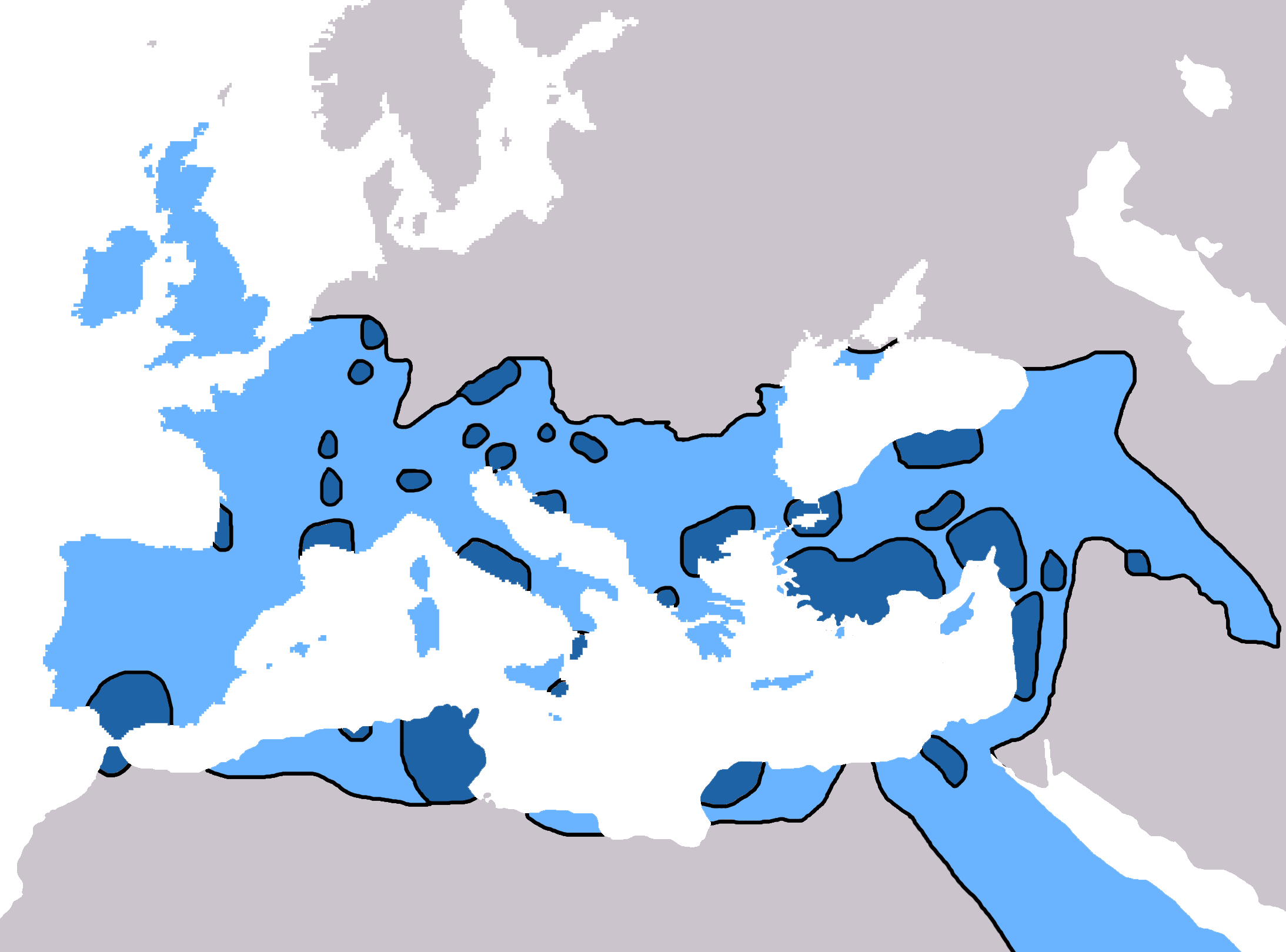
:{| class="wikitable" style="float:right; margin:0 0 0.5em 1em;" border="1" |+ Major communions of the 4th-5th centuries ! Communion !! Primary centers |- | Roman Empire and western Europe || Rome, Alexandria, Constantinople |- | Church of the East || Syria, Sasanian (Persia) Empire |- | Oriental Orthodox or Non-Chalcedonian || Armenia, Syria, Egypt |- | Donatist Church || North Africa |- | Gothic Arian Church || Gothic tribes |} With Christianity the dominant faith in some urban centers, Christians accounted for approximately 10% of the Roman population by 300, according to some estimates. Roman Emperor Diocletian launched the bloodiest campaign against Christians that the empire had witnessed. The persecution ended in 311 with the death of Diocletian. The persecution ultimately had not turned the tide on the growth of the religion, and because of the rapid growth, Christians accounted for 56.5% of the Roman population by 350. Christians had already organized to the point of establishing hierarchies of bishops. In 301 the Kingdom of Armenia became the first nation to adopt Christianity, followed by the Georgians in 324, the Axumite Empire circa 328 and the Romans in 380.
Roman Empire
Under Galerius
In April 311, Galerius, who had previously been one of the leading figures in the persecutions, issued an edict permitting the practice of the Christian religion under his rule. Lactantius, De Mortibus Persecutorum ("On the Deaths of the Persecutors") ch.34–35 From 313 to 380, Christianity enjoyed the status of being a legal religion within the Roman Empire. It had not become the sole authorized state religion, although it gradually gained prominence and stature within Roman society. After halting the persecutions of the Christians, Galerius reigned for another 2 years. He was then succeeded by an emperor with distinctively pro-Christian leanings, Constantine the Great.
Constantine I
Christian sources record that Constantine experienced a dramatic event in 312 at the Battle of Milvian Bridge, after which Constantine claimed the emperorship in the West. According to these sources, Constantine looked up to the sun before the battle and saw a cross of light above it, and with it the Greek words "ΕΝ ΤΟΥΤΩ ΝΙΚΑ" ("by this, conquer!", often rendered in the Latin "in hoc signo vinces"); Constantine commanded his troops to adorn their shields with a Christian symbol (the Chi-Ro), and thereafter they were victorious. How much Christianity Constantine adopted at this point is difficult to discern; most influential people in the empire, especially high military officials, were still pagan, and Constantine's rule exhibited at least a willingness to appease these factions.

The conversion to Christianity
The accession of Constantine was a turning point for the Christian Church. In 313, Constantine issued the Edict of Milan affirming the tolerance of Christians. Thereafter, he supported the Church financially, built various basilicas, granted privileges (e.g., exemption from certain taxes) to clergy, promoted Christians to high ranking offices, and returned property confiscated during the reign of Diocletian. Constantine utilized Christian symbols early in his reign but still encouraged traditional Roman religious practices including sun worship. Between 324 and 330, he built a new imperial capital at Byzantium on the Bosphorus (it came to be named for him: Constantinople)–the city employed overtly Christian architecture, contained churches within the city walls (unlike "old" Rome), and had no pagan temples. In 330 he established Constantinople as the new capital of the Roman Empire. The city would gradually come to be seen as the center of the Christian world.
Sociologist Joseph Bryant asserts that, by the time of Constantine, Christianity had already changed from its first century instantiation as a "marginal, persecuted, and popularly despised Christian sect" to become the fully institutionalized church "capable of embracing the entire Roman empire" that Constantine adopted. Without this transformation that Peter Brown has called "the conversion of Christianity" to the culture and ideals of the Roman world, Brown says Constantine would never have converted himself.
By the end of the second century Christianity was steadily expanding and its membership was socially rising. The church was becoming increasingly institutionalized, and there is evidence of moral erosion and declining commitment amongst its expanding membership. Bryant explains that, "The governing principle of the [sect is] in the personal holiness of its members". A church, on the other hand, is an organization where sanctity is found in the institution rather than the individual. To become a church, "Christianity had to overcome its alienation from the 'world' and successfully weather persecution, accept that it was no longer an ecclesia pura, (a sect of the holy and the elect), but was instead a corpus permixtum, a 'catholic' Church geared to mass conversions and institutionally endowed with extensive powers of sacramental grace and redemption". This "momentous transformation" threatened the survival of the marginal religious movement as it naturally led to divisions, schisms and defections. Bryant explains that, "once those within a sect determine that "the 'spirit' no longer resides in the parent body, 'the holy and the pure' typically find themselves compelled – either by conviction or coercion – to withdraw and establish their own counter-church, consisting of the 'gathered remnant' of God's elect". According to Bryant, this describes all the schisms of Christianity's first 300 years including the Montanists, the schism created by Hippolytus in 218 under Callistus, the Melitian schism, and the Donatists.
It is the Donatist schism that Bryant sees as the culmination of this sect to church dynamic. During the Melitian schism and the beginnings of the Donatist division, bishop Cyprian had felt compelled to "grant one laxist concession after another in the course of his desperate struggle to preserve the Catholic church". Roman emperors had always been religious leaders, but Constantine established precedent for the position of the Christian emperor in the Church. These emperors considered themselves responsible to God for the spiritual health of their subjects, and thus they had a duty to maintain orthodoxy. The emperor did not decide doctrine – that was the responsibility of the bishops – rather his role was to enforce doctrine, root out heresy, and uphold ecclesiastical unity. The emperor ensured that God was properly worshiped in his empire; what proper worship consisted of was the responsibility of the church. Constantine had commissioned more than one investigation into the Donatist issues and they all ruled in support of the Catholic cause, yet the Donatists refused to submit to either imperial or ecclesiastical authority. For a Roman emperor, that was sufficient cause to act. Brown says Roman authorities had shown no hesitation in "taking out" the Christian church they had seen as a threat to empire, and Constantine and his successors did the same, for the same reasons. Constantine's precedent of deferring to councils on doctrine, and accepting responsibility for their enforcement, would continue generally until the empire's end, although there were a few emperors of the 5th and 6th centuries who sought to alter doctrine by imperial edict without recourse to councils.
In 325 Constantine called for the Council of Nicaea, which was effectively the first Ecumenical Council (the Council of Jerusalem was the first recorded Christian council but rarely is it considered ecumenical), to deal mostly with the Arian heresy, but which also issued the Nicene Creed, which among other things professed a belief in One Holy Catholic Apostolic Church, the start of Christendom. John Kaye characterizes the conversion of Constantine, and the council of Nicea, as two of the most important things to ever happen to the Christian church.
Constantius II
Constantine's sons banned pagan State religious sacrifices in 341 but did not close the temples. Although all State temples in all cities were ordered shut in 356, there is evidence that traditional sacrifices continued. When Gratian declined the position and title of Pontifex Maximus, his act effectively brought an end to the state religion because of the position's authority and ties within the administration. This ended state official practices but not the private religious practices, and consequently the temples remained open.
There was not a total unity of Christianity however, and Constantius II was an Arian who kept Arian bishops at his court and installed them in various sees, expelling the orthodox bishops.
Julian the Apostate
Constantius's successor, Julian, known in the Christian world as Julian the Apostate, was a philosopher who upon becoming emperor renounced Christianity and embraced a Neo-platonic and mystical form of paganism shocking the Christian establishment. While not actually outlawing Christianity, he became intent on re-establishing the prestige of the old pagan beliefs and practices. He modified these practices to resemble Christian traditions such as the episcopal structure and public charity (hitherto unknown in Roman paganism). Julian eliminated most of the privileges and prestige previously afforded to the Christian Church. His reforms attempted to create a form of religious heterogeneity by, among other things, reopening pagan temples, accepting Christian bishops previously exiled as heretics, promoting Judaism, and returning Church lands to their original owners. However, Julian's short reign ended when he died while campaigning in the East. Christianity came to dominance during the reign of Julian's successors, Jovian, Valentinian I, and Valens (the last Eastern Arian Christian emperor).
Nicaea Christianity becomes the state religion of the Roman Empire
Over the course of the 4th century the Christian body became consumed by debates surrounding orthodoxy, i.e. which religious doctrines are the correct ones. By the early 4th century a group in North Africa, later called Donatists, who believed in a very rigid interpretation of Christianity that excluded many who had abandoned the faith during the Diocletian persecutions, created a crisis in the western Empire. A Church synod, or council, was called in Rome in 313 followed by another in Arles in 314. The latter was presided over by Constantine while he was still a junior emperor. The councils ruled that the Donatist faith was heresy, and when the Donatists refused to recant, Constantine launched the first campaign of persecution by Christians against Christians. This was only the beginning of imperial involvement in the Christian theology.
Christian scholars within the empire were increasingly embroiled in debates regarding Christology. Opinions were widespread ranging from the belief that Jesus was entirely mortal to the belief that he was an Incarnation of God that had taken human form. The most persistent debate was that between the homoousian view (the Father and the Son are one and the same, eternal) and the Arian view (the Father and the Son are separate, but both divine). This controversy led to Constantine's calling a council meeting at Nicaea in 325.
Christological debates raged throughout the 4th century with emperors becoming ever more involved with the Church and the Church becoming ever more divided. The Council of Nicaea in 325 supported the Athanasian view. The Council of Rimini in 359 supported the Arian view. The Council of Constantinople in 360 supported a compromise that allowed for both views. The Council of Constantinople in 381 re-asserted the Athanasian view and rejected the Arian view. Emperor Constantine was of divided opinions, but he largely backed the Athanasian faction (though he was baptized on his death bed by the Arian bishop Eusebius of Nicomedia). His successor Constantius II supported a Semi-Arian position. Emperor Julian favored a return the traditional Roman/Greek religion, but this trend was quickly quashed by his successor Jovian, a supporter of the Athanasian faction.
In 380 Emperor Theodosius issued the Edict of Thessalonica, which established Christianity as the official state religion, specifically the faith established by the Council of Nicaea in 325: Theodosius called the Council of Constantinople in 381 to further refine the definition of orthodoxy. In 391 Theodosius closed all of the pagan (non-Christian and non-Jewish) temples and formally forbade pagan worship. These adhering state churches can be seen as effectively a department of the Roman state. All other Christian sects were explicitly declared heretical and illegal. In 385, came the first capital punishment of a heretic was carried out on Priscillian of Ávila.
Ecumenical Councils of the 4th century
Main article: First seven Ecumenical Councils
The First Council of Nicaea (325) and the First Council of Constantinople (381) were a part of what would later be called the first seven Ecumenical Councils, which span 400 years of church history.
First Council of Nicaea
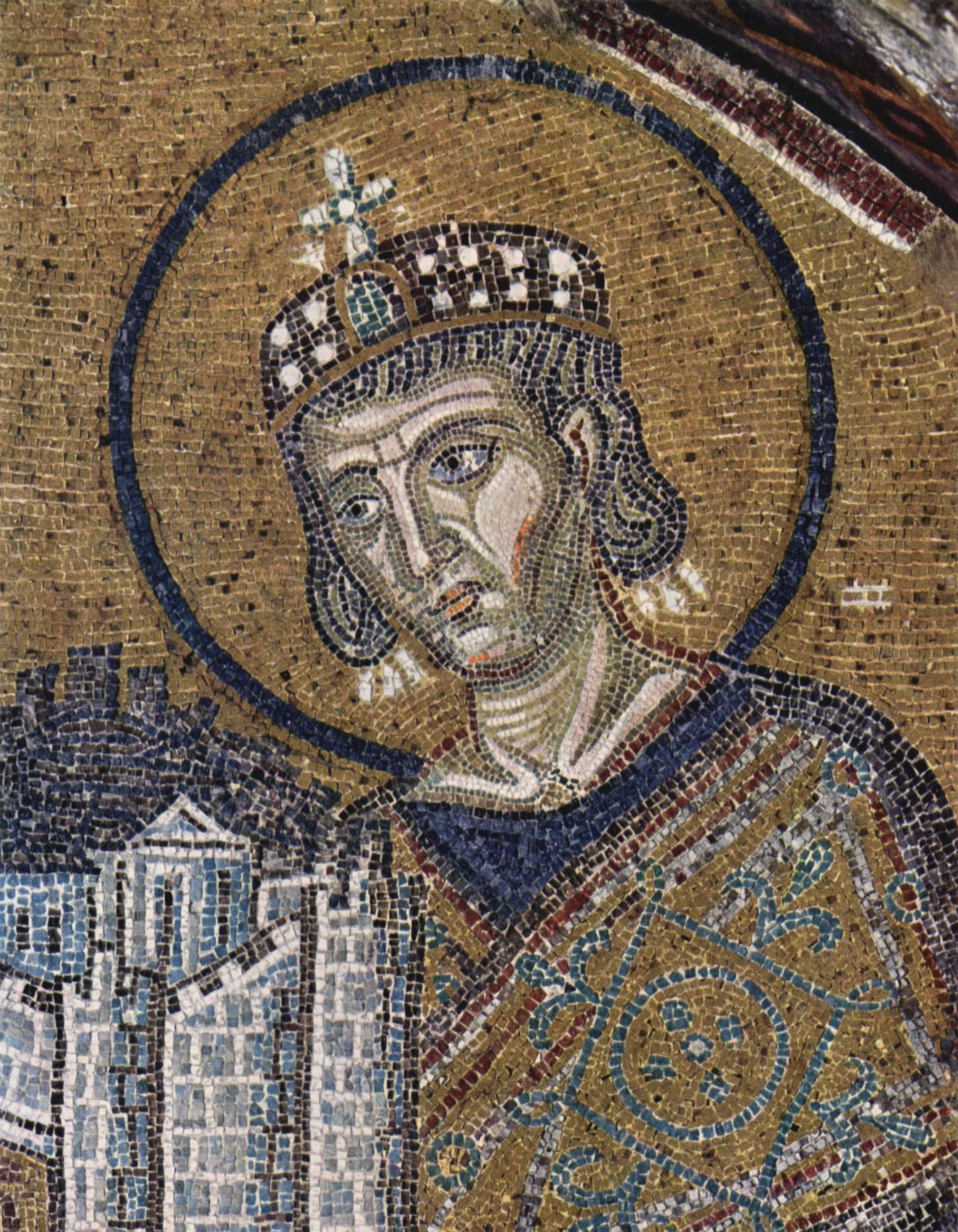
The First Council of Nicaea, held in Nicaea in Bithynia (in present-day Turkey), convoked by Roman Emperor Constantine I in 325, was the first ecumenical conference of bishops of the Catholic Church (Catholic as in 'universal', not just Roman) and most significantly resulted in the first declaration of a uniform Christian doctrine.
The purpose of the council was to resolve disagreements in the Church of Alexandria over the nature of Jesus in relationship to the Father; in particular, whether Jesus was of the same substance as God the Father or merely of similar substance. Alexander of Alexandria and Athanasius took the first position; the popular presbyter Arius, from whom the term Arian controversy comes, took the second. The council decided against the Arians overwhelmingly (of the estimated 250–318 attendees, all but 2 voted against Arius). Another result of the council was an agreement on the date of the Christian Passover (Pascha in Greek; Easter in modern English), the most important feast of the ecclesiastical calendar. The council decided in favour of celebrating the resurrection on the first Sunday after the first full moon following the vernal equinox, independently of the Bible's Hebrew calendar, and authorized the Bishop of Alexandria (presumably using the Alexandrian calendar) to announce annually the exact date to his fellow bishops.
The council was historically significant because it was the first effort to attain consensus in the church through an assembly representing all of Christendom. With the creation of the Nicene Creed, a precedent was established for subsequent general councils to create a statement of belief and canons which were intended to become guidelines for doctrinal orthodoxy and a source of unity for the whole of Christendom – a momentous event in the history of the Church and subsequent history of Europe.
The council was opposed by the Arians, and Constantine tried to reconcile Arius with the Church. Even when Arius died in 336, one year before the death of Constantine, the controversy continued, with various separate groups espousing Arian sympathies in one way or another. In 359, a double council of Eastern and Western bishops affirmed a formula stating that the Father and the Son were similar in accord with the scriptures, the crowning victory for Arianism. The opponents of Arianism rallied, but in the First Council of Constantinople in 381 marked the final victory of Nicene orthodoxy within the empire, though Arianism had by then spread to the Germanic tribes, among whom it gradually disappeared after the conversion of the Franks to Catholicism in 496.

First Council of Constantinople

The First Council of Constantinople approved the current form of the Nicene Creed as it is still used in the Eastern Orthodox Church and Oriental Orthodox churches. The creed, originally written in Greek, was subsequently translated in other languages. The form used by the Armenian Apostolic Church, which is part of Oriental Orthodoxy, has several additions to the original text. This fuller creed may have existed before the council and probably originated from the baptismal creed of Constantinople. Later, the Catholic Church in the west, added two additional Latin phrases ("Deum de Deo" and "Filioque"). The exact time, and origin, of these additions is disputed. However, they were formally accepted only in 1014.
The council also condemned Apollinarism, the teaching that there was no human mind or soul in Christ. It also granted Constantinople honorary precedence over all churches save Rome. The council did not include Western bishops or Roman legates, but it was accepted as ecumenical in the West.
Church Fathers

The Church Fathers, Early Church Fathers, or Fathers of the Church are the early and influential theologians and writers in the Christian Church, particularly those of the first five centuries of Christian history. The term is used of writers and teachers of the Church, not necessarily saints. Teachers particularly are also known as doctors of the Church, although Athanasius called them men of little intellect.
Nicene and Post-Nicene Fathers

Main article: Nicene and Post-Nicene Fathers
Late Antique Christianity produced a great many renowned Church Fathers who wrote volumes of theological texts, including Augustine of Hippo, Gregory Nazianzus, Cyril of Jerusalem, Ambrose of Milan, Jerome, and others. Some, such as John Chrysostom and Athanasius, suffered exile, persecution, or martyrdom from heretical Byzantine emperors. Many of their writings are translated into English in the compilations of Nicene and Post-Nicene Fathers.
Influential texts and writers between 325 and c.500 include:
- Athanasius (298–373)
- The Cappadocian Fathers (late 4th century)
- Ambrose (c. 340–397)
- Chrysostom (347–407)
Greek Fathers
Those who wrote in Greek are called the Greek (Church) Fathers.
Athanasius of Alexandria
Athanasius of Alexandria was a theologian, Pope of Alexandria, and a noted Egyptian leader of the 4th century. He is best remembered for his role in the conflict with Arianism. At the First Council of Nicaea, Athanasius argued against the Arian doctrine that Christ is of a distinct substance from the Father.
John Chrysostom
John Chrysostom, archbishop of Constantinople, is known for his eloquence in preaching and public speaking, his denunciation of abuse of authority by both ecclesiastical and political leaders, the Divine Liturgy of St. John Chrysostom, and his ascetic sensibilities. After his death (or, according to some sources, during his life) he was given the Greek surname chrysostomos, meaning "golden mouthed", rendered in English as Chrysostom.
Chrysostom is known within Christianity chiefly as a preacher, theologian, and liturgist, particularly in the Eastern Orthodox Church. Outside the Christian tradition Chrysostom is noted for eight of his sermons which played a considerable part in the history of Christian antisemitism and were extensively used by the Nazis in their ideological campaign against the Jews.
Latin Fathers
Those fathers who wrote in Latin are called the Latin (Church) Fathers.
Ambrose of Milan
Ambrose of Milan was a bishop of Milan who became one of the most influential ecclesiastical figures of the 4th century. He is counted as one of the four original doctors of the Church.
Monasticism
Desert Fathers
The Desert Fathers were early monastics living in the Egyptian desert; although they did not write as much, their influence was also great. Among them are St. Anthony the Great and St. Pachomius. A great number of their usually short sayings is collected in the Apophthegmata Patrum ("Sayings of the Desert Fathers").
Early Christian monasticism
The first efforts to create a proto-monastery were by Saint Macarius, who established individual groups of cells such as those at Kellia (founded in 328.) The intention was to bring together individual ascetics who, although pious, did not have the physical ability or skills to live a solitary existence in the desert . At Tabenna around 323, Saint Pachomius chose to mould his disciples into a more organized community in which the monks lived in individual huts or rooms (cellula in Latin) but worked, ate, and worshipped in shared space. Guidelines for daily life were created, and separate monasteries were created for men and women. This method of monastic organization is called cenobitic or "community-based." All the principal monastic orders are cenobitic in nature. In Catholic theology, this community-based living is considered superior because of the obedience practiced and the accountability offered. The head of a monastery came to be known by the word for "Father;" – in Syriac, Abba; in English, "Abbot."
Pachomius was called in to help organize others, and by one count by the time he died in 346 there were thought to be 3,000 such communities dotting Egypt, especially the Thebaid. Within the span of the next generation this number increased to 7,000. From there monasticism quickly spread out first to Palestine and the Judean Desert, Syria, North Africa and eventually the rest of the Roman Empire.
Eastern monasticism

Orthodox monasticism does not have religious orders as in the West, so there are no formal monastic rules; rather, each monk and nun is encouraged to read all of the Holy Fathers and emulate their virtues. There is also no division between the "active" and "contemplative" life. Orthodox monastic life embraces both active and contemplative aspects.

Gaul
The earliest phases of monasticism in Western Europe involved figures like Martin of Tours, who after serving in the Roman legions converted to Christianity and established a hermitage near Milan, then moved on to Poitiers where he gathered a community around his hermitage. He was called to become Bishop of Tours in 372, where he established a monastery at Marmoutiers on the opposite bank of the Loire River, a few miles upstream from the city. His monastery was laid out as a colony of hermits rather than as a single integrated community.
John Cassian began his monastic career at a monastery in Palestine and Egypt around 385 to study monastic practice there. In Egypt he had been attracted to the isolated life of hermits, which he considered the highest form of monasticism, yet the monasteries he founded were all organized monastic communities. About 410 he established two monasteries near Marseille, one for men, one for women. In time these attracted a total of 5,000 monks and nuns. Most significant for the future development of monasticism were Cassian's Institutes, which provided a guide for monastic life and his Conferences, a collection of spiritual reflections.
Honoratus of Marseille was a wealthy Gallo-Roman aristocrat, who after a pilgrimage to Egypt, founded the Monastery of Lérins, on an island lying off the modern city of Cannes. The monastery combined a community with isolated hermitages where older, spiritually-proven monks could live in isolation.
One Roman reaction to monasticism was expressed in the description of Lérins by Rutilius Namatianus, who served as prefect of Rome in 414:
Ask Mako anything about Christianity in the 4th century — get instant answers, deeper analysis, and related topics.
Research with MakoFree with your Surf account
Create a free account to save articles, ask Mako questions, and organize your research.
Sign up freeThis content may have been generated or modified by AI. CloudSurf Software LLC is not responsible for the accuracy, completeness, or reliability of AI-generated content. Always verify important information from primary sources.
Report