From Surf Wiki (app.surf) — the open knowledge base
Battle of Racławice
Battle of the Kościuszko Uprising

Battle of the Kościuszko Uprising
| Field | Value | ||
|---|---|---|---|
| conflict | Battle of Racławice | ||
| image | [[File:Jan Matejko - Kościuszko at Racławice - MNK II-a-151 - National Museum Kraków.jpg | 300px | Battle of Racławice]] |
| caption | "Battle of Racławice", Jan Matejko 465 × 897 cm. Kraków's National Museum. | ||
| partof | the Kościuszko Uprising | ||
| date | 4 April 1794 | ||
| place | Racławice, Lesser Poland | ||
| result | Polish victory | ||
| combatant1 | [[File:Banner of Kosciuszko Uprising flat.PNG | 23px]] Poland-Lithuania | |
| combatant2 | Russia Russian Empire | ||
| commander1 | [[File:Banner of Kosciuszko Uprising flat.PNG | 23px]] Tadeusz Kościuszko | |
| [[File:Banner of Kosciuszko Uprising flat.PNG | 23px]] Józef Zajączek | ||
| [[File:Banner of Kosciuszko Uprising flat.PNG | 23px]] Antoni Madaliński | ||
| commander2 | Russia | ||
| Russia Alexander Tormasov | |||
| strength1 | 5,000 | ||
| 11 guns | |||
| strength2 | 3,000 | ||
| 12 guns | |||
| casualties1 | 200–250 | ||
| casualties2 | 800 | ||
| 12 guns captured |
Russia Alexander Tormasov 11 guns 12 guns 12 guns captured
The Battle of Racławice was one of the first battles of the Kościuszko Uprising against Russia. It was fought on 4 April 1794 near the village of Racławice in Lesser Poland.
The battle site is one of Poland's official national Historic Monuments (Pomnik historii), as designated on 1 May 2004. Its listing is maintained by the National Heritage Board of Poland. In the original text of Poland Is Not Yet Lost, the battle is mentioned in the last verse.
Battle
General Denisov, with 2,500 troops, had planned to attack the Poles from the south, while Tormasov's force of 3,000 troops blocked Kościuszko. Encountering Tormasov's force first, Kościuszko occupied a nearby hill, General Antoni Madalinski on his right and General Józef Zajączek on his left. Not waiting any longer, Tormasov attacked the hill by 15:00, setting up their cannon. Kosciuszko inspired his peasant brigade with shouts of "My boys, take that artillery! For God, and the Fatherland! Go forward with faith!"
The first group of serfs captured 3 twelve-pound cannons and the second wave captured eight more cannons. Moving to his left flank, Kosciuszko led a bayonet charge when the Russians fled, followed closely by the scythemen.
The Polish Order of Battle was as follows:
| unit | superior | soldiers | 2440 men altogether |
|---|---|---|---|
| 2 battalions | Infantry Regiment of Czapski | 400 bayonets | |
| 2 battalions | Infantry Regiment of Wodzicki | 400 bayonets | |
| 2 battalions | Infantry Regiment of Ożarowski | 400 bayonets | |
| 1 battalion | Infantry Regiment of Raczyński | 200 bayonets | |
| 10 squadrons of cavalry | under Antoni Madaliński | 400 sabres | |
| 10 squadrons of cavalry | under Magnet | 400 sabres | |
| 4 cavalry squadrons | under Biernacki | 160 sabres | |
| 2 auxiliary cavalry squadrons | Duchy of Württemberg | 80 sabres |
In addition, Lesser Poland fielded approximately 2,000 peasants armed with war scythes and pikes, known as kosynierzy, as well as 11 cannons. The outcome of the battle was a tactical Polish victory, with Kościuszko defeating the numerically inferior enemy. However, his forces were too small to undertake a successful pursuit, and the Corps of General Denisov evaded destruction and continued to operate in Lesser Poland.
Aftermath
Kościuszko marched back to Kraków and made camp in the fields of Bosutow. After the battle, Kościuszko paraded before his troops in a sukmana, a traditional attire worn in Lesser Poland, in honour of the bravery of the peasants, whose charge ensured the quick capture of the Russian artillery. He smothered its fuse with his hat before it fired. In return he received an award of nobility, his freedom, a tract of land and made standard-bearer.
The victory was subsequently promoted in Poland as a major success and helped in spreading the Kościuszko Uprising to other areas of Poland and instigating the Warsaw Uprising of 1794. Also, the participation of peasant volunteers was seen by many as the starting point of the Polish peasantry's political evolution from serfs to equally entitled citizens of the nation.
Legacy

Military
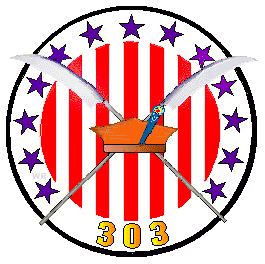
The red cap worn by Kościuszko's soldiers and the homemade war scythes were later featured on the emblem of the RAF's 303 (Polish) Fighter Squadron, which took part in the Battle of Britain.
The Battle of Racławice is commemorated on the Tomb of the Unknown Soldier, Warsaw, with the inscription "RACŁAWICE 4 IV 1794".
Art
Jan Matejko's painting, Kościuszko at Racławice, depicts the battle and is on display at the Sukiennice Museum, a branch of the National Museum in Kraków. A monumental panorama (measuring 15 x 114 meters) known as the Racławice Panorama was completed a century after the battle in 1894, and is currently on display in Wrocław as a branch of the National Museum in Wrocław.
References
References
- Storozynski, A., 2009, The Peasant Prince, New York: St. Martin's Press, {{ISBN. 9780312388027
- (2000). "The Military Genius of Tadeusz Kosciuszko". Polish Academic Information Center, University at Buffalo.
- "The Gallery of 19th-Century Polish Art in the Sukiennice - National Museum in Krakow".
- "History".
This article was imported from Wikipedia and is available under the Creative Commons Attribution-ShareAlike 4.0 License. Content has been adapted to SurfDoc format. Original contributors can be found on the article history page.
Ask Mako anything about Battle of Racławice — get instant answers, deeper analysis, and related topics.
Research with MakoFree with your Surf account
Create a free account to save articles, ask Mako questions, and organize your research.
Sign up freeThis content may have been generated or modified by AI. CloudSurf Software LLC is not responsible for the accuracy, completeness, or reliability of AI-generated content. Always verify important information from primary sources.
Report