From Surf Wiki (app.surf) — the open knowledge base
Adolfo Suárez
Prime Minister of Spain (1976–1981)
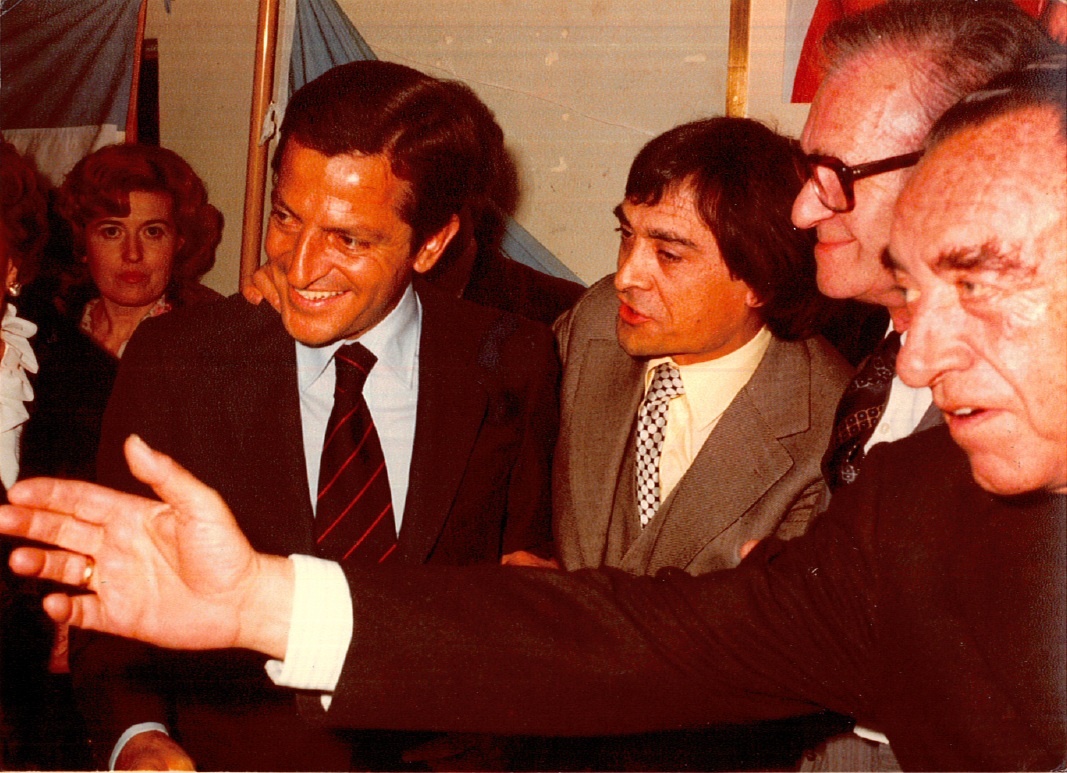
Prime Minister of Spain (1976–1981)
| Field | Value |
|---|---|
| honorific-prefix | The Most Excellent |
| name | The Duke of Suárez |
| honorific-suffix | GE |
| image | Adolfo Suárez 1979c (cropped).jpg |
| caption | Suárez in 1979 |
| office | Prime Minister of Spain |
| term_start | 5 July 1976 |
| term_end | 26 February 1981 |
| deputy | Manuel Gutiérrez Mellado |
| monarch | Juan Carlos I |
| predecessor | Carlos Arias Navarro |
| successor | Leopoldo Calvo Sotelo |
| office1 | President of the Liberal International |
| term_start1 | 26 April 1989 |
| term_end1 | 22 April 1992 |
| predecessor1 | Giovanni Malagodi |
| successor1 | Otto Graf Lambsdorff |
| office2 | President of the Democratic and Social Centre |
| term_start2 | 2 October 1982 |
| term_end2 | 26 May 1991 |
| predecessor2 | Party established |
| successor2 | Rafael Calvo Ortega |
| office3 | President of the Union of the Democratic Centre |
| term_start3 | 21 October 1978 |
| term_end3 | 9 February 1981 |
| predecessor3 | Party established |
| successor3 | Agustín Rodríguez Sahagún |
| office4 | Minister-Secretary General of the Movimiento Nacional |
| term_start4 | 12 December 1975 |
| term_end4 | 6 July 1976 |
| predecessor4 | Ignacio García López |
| successor4 | José Solís Ruiz |
| office5 | Deputy Secretary General of the Movimiento Nacional |
| term_start5 | 21 March 1975 |
| term_end5 | 2 July 1975 |
| predecessor5 | Antonio García Rodríguez-Acosta |
| successor5 | Antonio Chozas Bermúdez |
| office6 | Director General of RTVE |
| term_start6 | 14 May 1969 |
| term_end6 | 25 June 1973 |
| predecessor6 | Jesús Aparicio-Bernal |
| successor6 | Rafael Orbe |
| office7 | Civil Governor of the Province of Segovia |
| term_start7 | 31 May 1968 |
| term_end7 | 7 November 1969 |
| predecessor7 | Juan Murillo de Valdivia |
| successor7 | Mariano Pérez-Hickman |
| office8 | Member of the Congress of Deputies |
| term_start8 | 22 July 1977 |
| term_end8 | 26 October 1991 |
| constituency8 | Madrid |
| birth_date | |
| birth_place | Cebreros, Ávila, Second Spanish Republic |
| death_date | |
| death_place | Madrid, Spain |
| restingplace | Cathedral of Ávila |
| birthname | Adolfo Suárez González |
| party | Democratic and Social Centre (1982–1991) |
| otherparty | FET y de las JONS |
| (1958–1977) | |
| Union of the Democratic Centre | |
| (1977–1982) | |
| spouse | |
| children | 5, including Adolfo |
| alma_mater | Salamanca University |
| occupation | Jurist |
| signature | Firma de Adolfo Suárez.svg |
| honorific-prefix = The Most Excellent | honorific-suffix = GE (1958–1977) Union of the Democratic Centre (1977–1982) Adolfo Suárez González, 1st Duke of Suárez (; 25 September 1932 – 23 March 2014) was a Spanish lawyer and politician. Suárez was Spain's first democratically elected prime minister since the Second Spanish Republic and a key figure in the country's transition to democracy after the dictatorship of Francisco Franco.
When Spain was still an autocratic regime, he was appointed prime minister by King Juan Carlos in 1976. At the time of his appointment, he was not a well-known figure, making many political forces skeptical of his government. However, he oversaw the end of the Francoist Cortes, and the legalisation of all political parties (including the Communist Party of Spain, a particularly difficult move). He led the Union of the Democratic Centre and won the 1977 general election. In 1981, he resigned and founded the party Democratic and Social Centre (CDS), which was elected to the Cortes numerous times. He retired from politics in 1991 and from public life in 2003, due to Alzheimer's disease.
Early life
Adolfo Suárez González was born on 25 September 1932 in Cebreros in the Province of Ávila of Spain, the eldest son of Hipólito Suárez Guerra, a lawyer, and Herminia González Prados. Both of his parents supported the Republicans during the Spanish Civil War. At the age of 18, Suárez was president of the Ávila chapter of Catholic Action. He also worked briefly as a porter at Madrid's Atocha railway station.
Political career
Early career
In 1958, Suárez became the personal secretary of Fernando Herrero Tejedor, the newly appointed civil governor of Ávila. When Tejedor was made deputy secretary-general of the Movimiento Nacional in 1961, Suárez became his chef de cabinet. He gradually rose through the ranks of the Movimiento. In 1965, Suárez was appointed programme director of the state broadcaster Radio y Televisión Española (RTVE). In 1967, he was elected to the Francoist Cortes. In 1968, Suárez was promoted to civil governor and provincial head of the Movimiento in Segovia. In 1969, he was made director general of RTVE. Under this capacity, he became a close friend to future king Prince Juan Carlos.
In March 1975, Herrero Tejedor became secretary-general of the Movimiento while Suárez was appointed deputy secretary-general. Herrero Tejedor was considered a likely candidate for prime minister until his death in a car accident in June. In December, shortly after Francisco Franco's death, Suárez was promoted to secretary-general by prime minister Carlos Arias Navarro, and became a member of Arias's cabinet. In the same year, he also became a founding member of the Spanish People's Union (Unión del Pueblo Español, UDPE).
Premiership
In July 1976, King Juan Carlos requested the resignation of Arias. The relatively obscure Suárez was chosen as the new Prime Minister of Spain, surprising many observers. Nevertheless, it was noted that due to his age (he turned 7 years old the year that the civil war ended), Suárez was not as strongly associated with the bloody Civil War or the most brutal years of Franco's rule as the older politicians.
Within a year of his appointment, Suárez had rapidly introduced reform measures and taken decisive steps in Spain's transition to democracy (La Transición). The Political Reform Act, which permitted universal suffrage and established the basis for a new, bicameral parliament, was passed by a huge majority in the Francoist Cortes in November 1976 and overwhelmingly approved by a referendum in December. Suárez managed to placate the conservative military officers, while also reaching out to Felipe González's Spanish Socialist Workers' Party (PSOE) and later, Santiago Carrillo's Communist Party of Spain (PCE). Between February and April 1977, the PSOE and the PCE were both legalised, trade unions were recognised, and the Movimiento was abolished. The legalisation of the PCE in particular provoked fury in the Spanish military; Suárez responded by sacking hardliners and promoting more liberal officers such as Manuel Gutiérrez Mellado. On 15 June, Suárez led the Union of the Democratic Centre (Unión de Centro Democrático, UCD) to victory in Spain's first free elections in 41 years, and became the first democratically elected prime minister of the post-Francoist Spain.
In 1978, during Suárez's premiership, Spain voted in the United Nations General Assembly condemning human rights abuses in Chile, thus distancing Spain from the Francoist-influenced military dictatorship of Augusto Pinochet.
Suárez's centrist government instituted further democratic reforms. A new constitution, which recognised Spain as a constitutional monarchy, was approved by a referendum in December 1978. In an effort to address separatist tensions and calls for increased local autonomy, Suárez also negotiated the creation of Spain's autonomous communities. Suárez's coalition won the 1979 Spanish general election under the new constitution.
Suárez's political power eroded as he struggled to deal with economic recession, mounting violent activity by ETA, calls for further regional autonomy and divisions within his own party. He became increasingly withdrawn from governance, partly due to a chronic dental condition. He survived a motion of no confidence presented by Felipe González and the PSOE in May 1980. In January 1981, trailing in the polls behind the PSOE and faced with a revolt within the UCD, Suárez announced his resignation as prime minister. A month later, as parliament took the vote to confirm Suárez's successor Leopoldo Calvo-Sotelo, Lieutenant-Colonel Antonio Tejero and around 200 Civil Guards stormed the chamber in an attempted coup and held the lawmakers hostage for some 22 hours. Suárez, along with two other parliamentarians, exhibited defiance by remaining calmly seated during the panic. The 23-F coup attempt ("El Tejerazo") failed as it was opposed by Spain's main newspaper El País (who managed to get a special edition in favor of the constitution issued and distributed on the evening of the coup attempt) and denounced by King Juan Carlos I in a televised address. Meanwhile, promised military support for the coup failed to materialise – with few exceptions, most notably Jaime Milans del Bosch who led pro-coup troops in Valencia.
Post-premiership
In 1982, Suárez founded the Democratic and Social Centre (Centro Democrático y Social, CDS) party, which never achieved the success of UCD, though Suárez and its party were important elements in the Liberal International, joining it in 1988, leading to it being renamed Liberal and Progressive International, and Suárez became President of the Liberal International in 1988. He retired from active politics in 1991, for personal reasons.
In 1981, Suárez was raised into the Spanish nobility by King Juan Carlos of Spain and given the hereditary title of "Duque de Suárez" (Duke of Suárez), together with the title Grande de España (English: Grandee of Spain) following his resignation as Prime Minister and in recognition of his role in the transition to democracy. Suárez was awarded the Príncipe de Asturias a la Concordia in September 1996 for his role in Spain's early democracy. On 8 June 2007, during the celebration of the 30th anniversary of the first democratic elections, King Juan Carlos appointed Suárez the 1,193rd Knight of the Order of the Golden Fleece. He was also a member of the Club de Madrid, an independent organization (based in Madrid) that is composed of more than 80 former democratic Prime Ministers and Presidents. The group works to strengthen democratic governance and leadership.
Illness and death

On 31 May 2005, Suárez's son, Adolfo Suárez Illana, announced on Spanish television that his father was suffering from Alzheimer's disease. The announcement followed speculation about Suárez's health in the Spanish media. On 21 March 2014, his son announced that his death from neurological deterioration was imminent. Suárez then died as a result of a respiratory infection on 23 March 2014 in a clinic in Madrid. Suarez was given a state funeral and was buried in the cloister of Ávila Cathedral.
Pope Francis shared his condolences, saying: "In fraternal suffrage with you all, I make fervent prayers to the Lord for the eternal rest of this esteemed and feature figure of the recent history of Spain."
On 26 March 2014, the Spanish government decided to rename the Madrid-Barajas Airport to Adolfo Suárez Madrid–Barajas Airport in honour of his service to the country.
Allegations of sexual abuse against a teenager
In December 2025 a woman accused Suárez of sexual abuse between 1982–1985, beginning when she was seventeen and still a minor, and Suárez was about fifty. However, no criminal proceedings are expected to take place due to Suárez's death in 2014 and an expiration of the alleged crimes. Suárez's secretary reportedly disputed the accusations made against her former employer.
Family

Suárez married María del Amparo Illana Elórtegui in 1961. She died from cancer on 17 May 2001.{{Cite news|newspaper=El País|url=https://elpais.com/diario/2001/05/18/agenda/990136802_850215.html|date=18 May 2001
Suarez' youngest daughter, María Sonsoles Suárez Illana (born 1967), became a TV news anchor for Antena 3. From 1992 to 1994 she was married to José María Martínez-Bordiú y Bassó de Roviralta (a nephew of Cristóbal Martínez-Bordiú, the son-in-law of Francisco Franco); the couple was without issue. In 2012 she married the Mozambican musician Paulo Wilson, and they separated in 2017.
Suárez's eldest son, Adolfo Suárez Illana, is a politician and lawyer who is heavily involved with the world of bullfighting; he has two sons. Suárez had two more children, his daughter Laura and his son Francisco Javier; both remain unmarried.
Honours
Decorations
National
- Spain
- [[File:Order of the Golden Fleece ribbon bar.svg|70px]] 1,193rd Knight of the Order of the Golden Fleece (8 June 2007).
- [[File:Order of Charles III - Sash of Collar.svg|70px]] Collar of the Order of Charles III (Posthumously) (24 March 2014).
- [[File:ESP Charles III Order GC.svg|70px]] Grand Cross of the Order of Charles III (23 June 1978).
- [[File:ESP Isabella Catholic Order GC.svg|70px]] Grand Cross of the Order of Isabella the Catholic (29 September 1973).
- [[File:Order of Civil Merit (Spain) GC.svg|70px]] Grand Cross of the Order of Civil Merit (18 July 1969).
- [[File:ESP Alfonso X Order GC.svg|70px]] Grand Cross of the Civil Order of Alfonso X, the Wise (1 April 1970).
- [[File:ESP Alfonso X Order - Common.svg|70px]] Commander's Cross of the Civil Order of Alfonso X, the Wise (1 April 1967).
- [[File:ESP Gran Cruz Merito Naval (Distintivo Rojo) pasador.svg|70px]] Grand Cross of the Order of Naval Merit (1 April 1972).
- [[File:Orde del Cardenal Cisneros.gif|70px]] Grand Cross of the Order of Cisneros (18 July 1972).
- [[File:Ordem-Yugo-Flechas.png|70px]] Grand Cross of the Order of the Yoke and the Arrows (4 July 1975).
- [[File:ESP Gran Cruz Merito Militar (Distintivo Blanco) pasador.svg|70px]] Grand Cross of the Military Merit with White Decoration (14 September 1970).
Foreign
- Portugal:
- [[File:PRT Order of Christ - Grand Cross BAR.svg|70px]] Grand Cross of the Order of Christ (20 April 1978).
- [[File:PRT Order of Liberty - Grand Cross BAR.svg|70px]] Grand Cross of the Order of Liberty (22 February 1996).
Awards
- Gold Medal of Segovia (17 November 1969).
- Gold Medal of Ávila (12 February 1981). Received on 9 June 2005.
- Adopted Son of Ávila (12 February 1981). Received on 9 June 2005.
- Alfonso X the Wise International Prize in Toledo (21 October 1994).
- Gold Medal of Madrid (30 November 1995). Received on 10 November 1998.
- Honorary Degree by the Complutense University of Madrid (28 May 1996).
- Prince of Asturias Concord Award (13 September 1996).
- Coexistence Award of Ceuta (30 April 1999).
- Gold Medal of Castilla y León (22 March 1997).
- Medal of Honor of Madrid (15 May 2011).
- Adopted Son of Madrid (Posthumous, 27 March 2014).
Arms
Coat of arms bore as knight of the Order of the Golden Fleece.
References
References
- (17 June 1977). "Spain's Election Victor". The New York Times.
- Fernández, Carlos. (25 February 2005). "Republicano y padre de presidente". La Voz de Galicia.
- Garcia Abad, José. (23 July 2006). "LA MUJER QUE HIZO A SUÁREZ". El Mundo.
- (29 March 2014). "Spain's democracy man". [[The Economist]].
- Preston, Paul. (23 March 2014). "Adolfo Suárez obituary". The Guardian.
- (23 March 2014). "Adolfo Suárez - obituary". The Telegraph.
- Langer, Emily. (23 March 2014). "Adolfo Suarez, former Spanish prime minister, dies at 81". [[The Washington Post]].
- Fotheringham, Alasdair. (23 March 2014). "Adolfo Suarez: Spain's first democratically elected Prime Minister who oversaw the transition from the country's Franco years". [[The Independent]].
- González, Javier M.. (2023-09-03). "Pinochet y Franco: admiración mutua e intercambio de cartas". nuevatribuna.es.
- (2007-05-29). "'De Franco a Pinochet': La historia de un fracaso exitoso". Universidad de Chile.
- (2003). "The ''Politics Today'' companion to West European politics". Manchester University Press.
- [[Boletín Oficial del Estado. BOE]] [http://www.boe.es/boe/dias/2007/06/09/pdfs/A25291-25291.pdf 07-06-09], Spanish official journal. Retrieved 9 June 2007.
- "Suárez, Adolfo". World Leadership Alliance.
- Cué, Francesco Manetto, Carlos E.. (21 March 2014). "El hijo de Adolfo Suárez sobre su padre: "El desenlace es inminente"". El País.
- El Mundo]], 23 March 2014
- (26 March 2014). "Adolfo Suárez reposa ya en Ávila bajo el epitafio 'La concordia fue posible'". EFE.
- (27 March 2014). "Telegrama de pésame del Papa Francisco por la muerte de Adolfo Suárez". Revista Ecclesia.
- (24 March 2014). "El aeropuerto de Madrid se llama desde hoy Adolfo Suárez". El Mundo.
- Reguero Ríos, Patricia. (18 December 2025). "Una mujer denuncia a Adolfo Suárez por agredirla sexualmente durante tres años". [[El Salto (newspaper).
- Herrero, Daniel. (19 December 2025). "La denunciante de Adolfo Suárez: "No me quería llevar este secreto a la tumba como él"". [[RTVE]].
- (7 March 2004). "Mariam Suárez, una luchadora contra el cáncer". El País.
- (10 November 2017). "Sonsoles Suárez, la hija del expresidente Adolfo Suárez, se separa de su marido Paulo Wilson". El País.
- "Boletín Oficial del Estado 07-06-09, Spanish Official Journal".
- "Boletín Oficial del Estado 14-03-24, Spanish Official Journal".
- [https://archive.today/20120629002706/http://www.boe.es/aeboe/consultas/bases_datos/doc.php?id=BOE-A-1978-16667 Boletín Oficial del Estado 78-06-23, Spanish Official Journal] (accessed on 23 December 2011)
- '''Spanish:''' [https://archive.today/20120629002707/http://www.boe.es/aeboe/consultas/bases_datos/doc.php?id=BOE-A-1973-47628 Boletín Oficial del Estado 73-09-29, Spanish Official Journal] (accessed on 23 December 2011)
- '''Spanish:''' [https://archive.today/20120629002707/http://www.boe.es/aeboe/consultas/bases_datos/doc.php?id=BOE-A-1969-47111 Boletín Oficial del Estado 69-07-18, Spanish Official Journal] (accessed on 23 December 2011)
- '''Spanish:''' [https://archive.today/20120629002711/http://www.boe.es/aeboe/consultas/bases_datos/doc.php?id=BOE-A-1970-47804 Boletín Oficial del Estado 71-04-05, Spanish Official Journal] (accessed on 23 December 2011)
- '''Spanish:''' [https://archive.today/20120629002708/http://www.boe.es/aeboe/consultas/bases_datos/doc.php?id=BOE-A-1967-8026 Boletín Oficial del Estado 67-04-01, Spanish Official Journal] (accessed on 23 December 2011)
- '''Spanish:''' [https://www.boe.es/boe/dias/1972/04/01/pdfs/A05815-05815.pdf Boletín Oficial del Estado 72-04-01, Spanish Official Journal] (accessed on 24 March 2014)
- '''Spanish:''' [https://archive.today/20120629002708/http://www.boe.es/aeboe/consultas/bases_datos/doc.php?id=BOE-A-1972-44349 Boletín Oficial del Estado 72-07-18, Spanish Official Journal] (accessed on 23 December 2011)
- '''Spanish:''' [https://archive.today/20120629002708/http://www.boe.es/aeboe/consultas/bases_datos/doc.php?id=BOE-A-1972-44349 Boletín Oficial del Estado 75-07-04, Spanish Official Journal] (accessed on 23 December 2011)
- '''Spanish:''' [https://archive.today/20120629002711/http://www.boe.es/aeboe/consultas/bases_datos/doc.php?id=BOE-A-1970-47804 Boletín Oficial del Estado 70-09-15, Spanish Official Journal] (accessed on 23 December 2011)
- "CIDADÃOS ESTRANGEIROS AGRACIADOS COM ORDENS PORTUGUESAS – Página Oficial das Ordens Honoríficas Portuguesas".
- ''Medalla de Oro de la provincia de Segovia concedida a su Alteza Real Don Juan de Borbón y Battenberg'' (1991). Segovia. Provincial Council of Segovia. {{ISBN. 84-86789-35-4.
- Ávila, Diario de. (24 March 2014). "La "deuda histórica" de Ávila a Suárez".
- (27 January 2017). "Adolfo Suárez 1932 – 2014". El País.
- "ABC (Madrid) – 12/11/1998, p. 71 – ABC.es Hemeroteca".
- "ABC (Madrid) – 01/12/1995, p. 12 – ABC.es Hemeroteca".
- (27 January 2017). "Adolfo Suárez 1932 – 2014". El País.
- (14 September 1996). "Adolfo Suárez premio Príncipe de Asturias por su aportación a la "concordia democrática"". El País.
- "Con Adolfo Suárez se va el primer galardonado por la Fundación Premio Convivencia".
- (30 April 1999). "Suárez, González y Roca hablarán de "España desde la Constitución"". El País.
- "Adolfo Suárez, profeta en su tierra".
- (30 March 2011). "Adolfo Suárez recibirá la Medalla de Honor de Madrid y Aznar y González la de oro".
- (27 March 2014). "El Pleno municipal designa a Adolfo Suárez como Hijo Adoptivo".
- {{in lang. es ''[https://www.ampaasuarez.com/Utilidades/adolfo_suarez.pdf Adolfo Suárez, AMPA Súarez]'', p. 5 . Retrieved 24 March 2014.
This article was imported from Wikipedia and is available under the Creative Commons Attribution-ShareAlike 4.0 License. Content has been adapted to SurfDoc format. Original contributors can be found on the article history page.
Ask Mako anything about Adolfo Suárez — get instant answers, deeper analysis, and related topics.
Research with MakoFree with your Surf account
Create a free account to save articles, ask Mako questions, and organize your research.
Sign up freeThis content may have been generated or modified by AI. CloudSurf Software LLC is not responsible for the accuracy, completeness, or reliability of AI-generated content. Always verify important information from primary sources.
Report