From Surf Wiki (app.surf) — the open knowledge base
Α-Cyclodextrin

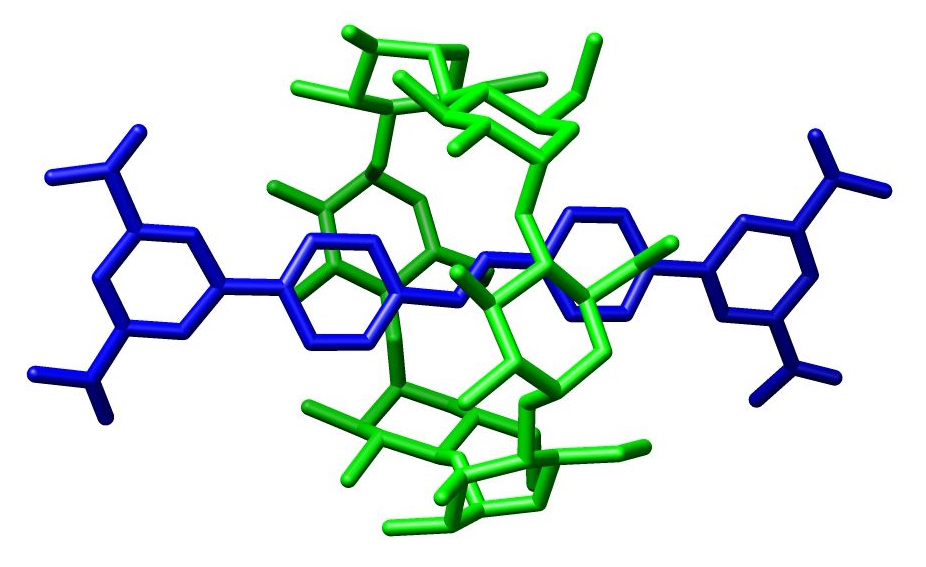
Cyclohexadextrin Cyclomaltohexose α-Cycloamylose α-Dextrin α-Cyclodextrin (alpha-cyclodextrin), sometimes abbreviated as α-CD, is a hexasaccharide derived from glucose. It is related to the β- (beta) and γ- (gamma) cyclodextrins, which contain seven and eight glucose units, respectively. All cyclodextrins are white, water-soluble solids with minimal toxicity. Cyclodextrins tend to bind other molecules in their quasi-cylindrical, lipophilic interiors. The compound is of wide interest because it exhibits host–guest properties, forming inclusion compounds. This inclusion (and release) behavior leads to applications in medicine.
Structure
Main article: cyclodextrin#Structure
In α-cyclodextrin, the six glucose subunits are linked end to end via α-1, 4 linkages. The result has the shape of a tapered cylinder, with six primary alcohols on one face and twelve secondary alcohol groups on the other. The exterior surface of cyclodextrins is somewhat hydrophilic whereas the interior core is hydrophobic.
Applications
α-Cyclodextrin is marketed for a range of medical, healthcare, and food and beverage applications. For drug delivery, this cyclodextrin confers aqueous solubility to hydrophobic drugs and stability to labile drugs.
Synthesis
Cyclodextrins are natural starch-conversion products. For industrial use, they are manufactured by enzymatic degradation from vegetable raw materials, such as corn or potatoes. First, the starch is liquified either by heat treatment or using α-amylase. Then cyclodextrin glycosyltransferase (CGTase) is added for enzymatic conversion. CGTases produce diverse cyclodextrins. The selectivity of the synthesis can be improved by the addition of specific guests.
References
References
- (2022). "Determination of Melting Parameters of Cyclodextrins Using Fast Scanning Calorimetry". Int. J. Mol. Sci..
- (2017). "Surveying macrocyclic chemistry: from flexible crown ethers to rigid cyclophanes". Chemical Society Reviews.
- József Szejtli. (1998). "Introduction and General Overview of Cyclodextrin Chemistry". Chem. Rev..
- {{cite encyclopedia. Wiley-VCH. (2012)
- (2001). "Synthesis of fluorescent stilbene and tolan rotaxanes by Suzuki coupling". Chemical Communications.
This article was imported from Wikipedia and is available under the Creative Commons Attribution-ShareAlike 4.0 License. Content has been adapted to SurfDoc format. Original contributors can be found on the article history page.
Ask Mako anything about Α-Cyclodextrin — get instant answers, deeper analysis, and related topics.
Research with MakoFree with your Surf account
Create a free account to save articles, ask Mako questions, and organize your research.
Sign up freeThis content may have been generated or modified by AI. CloudSurf Software LLC is not responsible for the accuracy, completeness, or reliability of AI-generated content. Always verify important information from primary sources.
Report