From Surf Wiki (app.surf) — the open knowledge base
1858–59 United States Senate elections
none
none
| Field | Value |
|---|---|
| election_name | 1858–59 United States Senate elections |
| country | United States |
| flag_year | 1858 |
| type | legislative |
| ongoing | no |
| previous_election | 1856–57 United States Senate elections |
| previous_year | 1856 & 1857 |
| next_election | 1860–61 United States Senate elections |
| next_year | 1860 & 1861 |
| seat_class | Class 2 |
| previous_seat_election | 1852–53 United States Senate elections |
| previous_seat_year | 1852 & 1853 |
| next_seat_election | 1864–65 United States Senate elections |
| next_seat_year | 1864 & 1865 |
| seats_for_election | 22 of the 66 seats in the United States Senate (with special elections) |
| majority_seats | 34 |
| election_date | Various dates |
| image_size | 100px |
| 1blank | Seats up |
| party1 | Democratic Party (US) |
| last_election1 | 34 seats |
| seats_before1 | 42 |
| seats1 | 13 |
| seats_after1 | 38 |
| seat_change1 | 4 |
| 1data1 | 17 |
| party2 | Republican Party (US) |
| last_election2 | 15 seats |
| seats_before2 | 20 |
| seats2 | 8 |
| seats_after2 | 25 |
| seat_change2 | 5 |
| 1data2 | 3 |
| party4 | American |
| last_election4 | 2 seats |
| seats_before4 | 4 |
| seats4 | 0 |
| seats_after4 | 2 |
| seat_change4 | 2 |
| 1data4 | 2 |
| party5 | Other |
| last_election5 | 4 seats |
| seats_before5 | 0 |
| seats5 | 0 |
| seats_after5 | 0 |
| seat_change5 | |
| 1data5 | 0 |
| title | Majority Party |
| before_party | Democratic Party (US) |
| after_party | Democratic Party (US) |
| map_image | File:1858senatemap.svg |
| map_caption | Results of the elections: |
| map_size | 380px |
The 1858–59 United States Senate elections were held on various dates in various states. As these U.S. Senate elections were prior to the ratification of the Seventeenth Amendment in 1913, senators were chosen by state legislatures. Senators were elected over a wide range of time throughout 1858 and 1859, and a seat may have been filled months late or remained vacant due to legislative deadlock. In these elections, terms were up for the senators in Class 2.
The Republican Party gained five additional seats in the Senate, but the Democrats retained their majority. That majority would erode in 1860 with the secession of the southern states leading up to the Civil War.
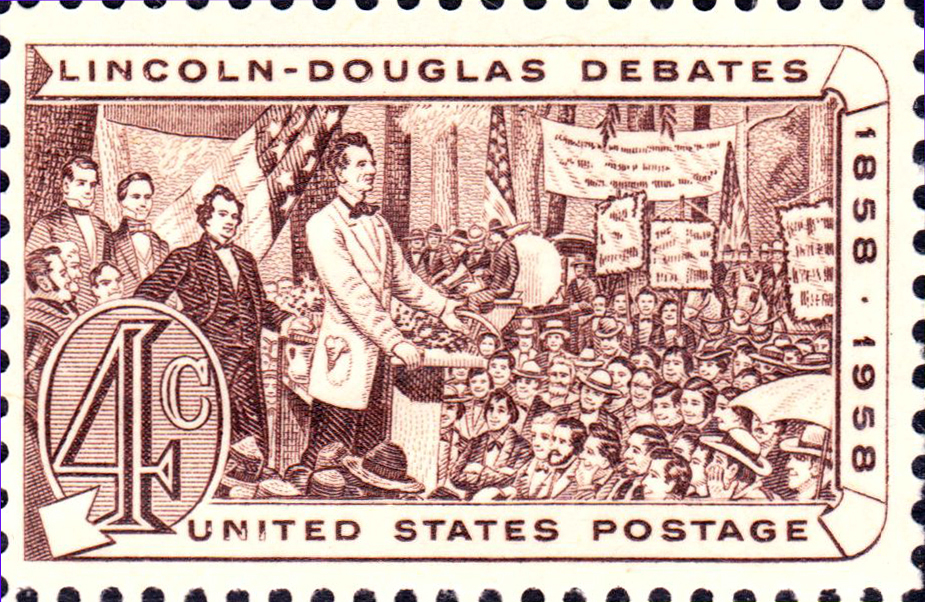
In Illinois, incumbent Stephen A. Douglas (D) and challenger Abraham Lincoln (R) held a series of seven debates, known as the "Lincoln–Douglas debates."
Results summary
Senate party division, 36th Congress (1859–1861)
- Majority party: Democratic (38–25)
- Minority party: Republican (25–26)
- Other parties: American (2)
- Total seats: 66–68
Change in Senate composition
Before the elections
| D26 | |||||||||||||||||||||||||||||||
|---|---|---|---|---|---|---|---|---|---|---|---|---|---|---|---|---|---|---|---|---|---|---|---|---|---|---|---|---|---|---|---|
| Ran | D27 | ||||||||||||||||||||||||||||||
| Ran | D28 | ||||||||||||||||||||||||||||||
| Ran | D29 | ||||||||||||||||||||||||||||||
| Ran | D30 | ||||||||||||||||||||||||||||||
| Ran | D31 | ||||||||||||||||||||||||||||||
| Ran | D32 | ||||||||||||||||||||||||||||||
| Ran | D33 | ||||||||||||||||||||||||||||||
| Ran | D34 | ||||||||||||||||||||||||||||||
| Ran | A4 | ||||||||||||||||||||||||||||||
| Unknown | D42 | ||||||||||||||||||||||||||||||
| Retired | D41 | ||||||||||||||||||||||||||||||
| Retired | D40 | ||||||||||||||||||||||||||||||
| Retired | D39 | ||||||||||||||||||||||||||||||
| Retired | D38 | ||||||||||||||||||||||||||||||
| Retired | D37 | ||||||||||||||||||||||||||||||
| Ran | D36 | ||||||||||||||||||||||||||||||
| Ran | D35 | ||||||||||||||||||||||||||||||
| Ran | A3 | ||||||||||||||||||||||||||||||
| Unknown | R20 | ||||||||||||||||||||||||||||||
| Ran | R19 | ||||||||||||||||||||||||||||||
| Ran | R18 | ||||||||||||||||||||||||||||||
| Ran | |||||||||||||||||||||||||||||||
| D24 | D25 | ||||||||||||||||||||||||||||||
| Majority → | |||||||||||||||||||||||||||||||
| A2 | A1 | R17 | R16 | R15 | R14 | ||||||||||||||||||||||||||
| R4 | R5 | R6 | R7 | R8 | R9 | R10 | R11 | R12 | R13 | ||||||||||||||||||||||
| R3 | R2 | R1 |
As a result of the elections
| D26 | |||||||||||||||||||||||||||||||
|---|---|---|---|---|---|---|---|---|---|---|---|---|---|---|---|---|---|---|---|---|---|---|---|---|---|---|---|---|---|---|---|
| Re-elected | D27 | ||||||||||||||||||||||||||||||
| Re-elected | D28 | ||||||||||||||||||||||||||||||
| Re-elected | D29 | ||||||||||||||||||||||||||||||
| Re-elected | D30 | ||||||||||||||||||||||||||||||
| Re-elected | D31 | ||||||||||||||||||||||||||||||
| Re-elected | D32 | ||||||||||||||||||||||||||||||
| Re-elected | D33 | ||||||||||||||||||||||||||||||
| Hold | D34 | ||||||||||||||||||||||||||||||
| Hold | R24 | ||||||||||||||||||||||||||||||
| Gain | R25 | ||||||||||||||||||||||||||||||
| Gain | V1 | ||||||||||||||||||||||||||||||
| D Loss | D38 | ||||||||||||||||||||||||||||||
| Gain | D37 | ||||||||||||||||||||||||||||||
| Gain | D36 | ||||||||||||||||||||||||||||||
| Hold | D35 | ||||||||||||||||||||||||||||||
| Hold | R23 | ||||||||||||||||||||||||||||||
| Gain | R22 | ||||||||||||||||||||||||||||||
| Gain | R21 | ||||||||||||||||||||||||||||||
| Gain | R20 | ||||||||||||||||||||||||||||||
| Re-elected | R19 | ||||||||||||||||||||||||||||||
| Re-elected | R18 | ||||||||||||||||||||||||||||||
| Re-elected | |||||||||||||||||||||||||||||||
| D24 | D25 | ||||||||||||||||||||||||||||||
| Majority → | |||||||||||||||||||||||||||||||
| A1 | A2 | ||||||||||||||||||||||||||||||
| R17 | R16 | R15 | R14 | ||||||||||||||||||||||||||||
| R4 | R5 | R6 | R7 | R8 | R9 | R10 | R11 | R12 | R13 | ||||||||||||||||||||||
| R3 | R2 | R1 |
| V# | Vacant |
|---|
|}
Race summaries
Special elections during the 35th Congress
In these elections, the winners were seated during 1858 or in 1859 before March 4; ordered by election date.
| State | Incumbent | Results | Candidates | Senator | Party | Electoral history | Minnesota | ||||||||
|---|---|---|---|---|---|---|---|---|---|---|---|---|---|---|---|
| (Class 1) | Minnesota | ||||||||||||||
| (Class 2) | Oregon | ||||||||||||||
| (Class 2) | Oregon | ||||||||||||||
| (Class 3) | North Carolina | ||||||||||||||
| (Class 3) | South Carolina | ||||||||||||||
| (Class 2) | |||||||||||||||
| None (new state) | Minnesota's first senators were elected May 11, 1858. | ||||||||||||||
| Democratic gain. | nowrap | Henry M. Rice (Democratic) | |||||||||||||
| Minnesota's first senators were elected May 11, 1858. | |||||||||||||||
| Democratic gain. | nowrap | {{Plainlist | |||||||||||||
| None (new state) | Oregon's first senators were elected in 1858 in advance of statehood. | ||||||||||||||
| Democratic gain. | nowrap | {{Plainlist | |||||||||||||
| Oregon's first senators were elected in 1858 in advance of statehood. | |||||||||||||||
| Democratic gain. | nowrap | {{Plainlist | |||||||||||||
| Thomas Clingman | Democratic | 1858 (appointed) | Interim appointee elected November 23, 1858 to finish the term. | nowrap | {{Plainlist | ||||||||||
| Arthur P. Hayne | Democratic | 1858 (appointed) | Interim appointee retired when successor elected. | ||||||||||||
| New senator elected December 3, 1858. | |||||||||||||||
| Democratic hold. | |||||||||||||||
| Winner was also elected to the next term; see below. | nowrap | {{Plainlist |
Races leading to the 36th Congress
In these regular elections, the winners were elected for the term beginning March 4, 1859; ordered by state.
All of the elections involved the Class 2 seats.
| State | Incumbent | Results | Candidates | Senator | Party | Electoral | |||||||||||||||||||||||||
|---|---|---|---|---|---|---|---|---|---|---|---|---|---|---|---|---|---|---|---|---|---|---|---|---|---|---|---|---|---|---|---|
| history | Alabama | Arkansas | Delaware | Georgia | Illinois | Iowa | Kentucky | Louisiana | Maine | Massachusetts | Michigan | Minnesota | Mississippi | New Hampshire | New Jersey | North Carolina | Oregon | Rhode Island | South Carolina | Tennessee | Texas | Virginia | |||||||||
| Clement Claiborne Clay | Democratic | 1853 (special) | Incumbent re-elected in 1858. | nowrap | {{Plainlist | ||||||||||||||||||||||||||
| William K. Sebastian | Democratic | 1848 (appointed) | |||||||||||||||||||||||||||||
| 1848 (special) | |||||||||||||||||||||||||||||||
| 1853 | Incumbent re-elected in 1859. | nowrap | {{Plainlist | ||||||||||||||||||||||||||||
| Martin W. Bates | Democratic | 1857 (special) | Incumbent lost re-election. | ||||||||||||||||||||||||||||
| New senator elected in 1858. | |||||||||||||||||||||||||||||||
| Democratic hold. | nowrap | {{Plainlist | |||||||||||||||||||||||||||||
| Robert Toombs | Democratic | 1852 | Incumbent re-elected in 1858. | nowrap | {{Plainlist | ||||||||||||||||||||||||||
| Stephen A. Douglas | Democratic | 1846 | |||||||||||||||||||||||||||||
| 1852 | Incumbent re-elected January 5, 1859. | nowrap | {{Plainlist | ||||||||||||||||||||||||||||
| George Wallace Jones | Democratic | 1848 | |||||||||||||||||||||||||||||
| 1852 | Incumbent lost renomination. | ||||||||||||||||||||||||||||||
| New senator elected January 26, 1858.{{cite book | title=History of Senatorial Elections in Iowa: A Study in American Politics | last= Clark | date= 1913 | url= https://books.google.com/books?id=jXJDAAAAIAAJ | page=119}} | ||||||||||||||||||||||||||
| Republican gain. | nowrap | {{Plainlist | |||||||||||||||||||||||||||||
| John B. Thompson | American | 1851 | Incumbent retired or lost re-election. | ||||||||||||||||||||||||||||
| New senator elected January 5, 1858. | |||||||||||||||||||||||||||||||
| Democratic gain. | nowrap | {{Plainlist | |||||||||||||||||||||||||||||
| Judah P. Benjamin | Democratic | 1852 | Incumbent re-elected in 1859. | nowrap | {{Plainlist | ||||||||||||||||||||||||||
| William P. Fessenden | Republican | 1854 (special) | Incumbent re-elected in 1859. | nowrap | {{Plainlist | ||||||||||||||||||||||||||
| Henry Wilson | Republican | 1855 (special) | Incumbent re-elected in 1859. | nowrap | {{Plainlist | ||||||||||||||||||||||||||
| Charles E. Stuart | Democratic | 1853 | Incumbent retired. | ||||||||||||||||||||||||||||
| New senator elected in 1858. | |||||||||||||||||||||||||||||||
| Republican gain. | nowrap | {{Plainlist | |||||||||||||||||||||||||||||
| James Shields | Democratic | 1849 (Ill.) | |||||||||||||||||||||||||||||
| 1849 (Ill.; election voided) | |||||||||||||||||||||||||||||||
| 1849 (Ill.; special) | |||||||||||||||||||||||||||||||
| 1855 (Ill.; lost) | |||||||||||||||||||||||||||||||
| 1858 (Minn.) | Incumbent lost re-election. | ||||||||||||||||||||||||||||||
| New senator elected December 15, 1859. | |||||||||||||||||||||||||||||||
| Republican gain. | nowrap | {{Plainlist | |||||||||||||||||||||||||||||
| Albert G. Brown | Democratic | 1854 (special) | Incumbent re-elected in 1859. | nowrap | {{Plainlist | ||||||||||||||||||||||||||
| John P. Hale | Republican | 1846 | |||||||||||||||||||||||||||||
| 1853 (retired) | |||||||||||||||||||||||||||||||
| 1855 | Incumbent re-elected in 1859. | nowrap | {{Plainlist | ||||||||||||||||||||||||||||
| William Wright | Democratic | 1852 or 1853 | Incumbent lost re-election. | ||||||||||||||||||||||||||||
| New senator elected in 1858. | |||||||||||||||||||||||||||||||
| Republican gain. | nowrap | {{Plainlist | |||||||||||||||||||||||||||||
| David Reid | Democratic | 1854 | Incumbent lost re-election. | ||||||||||||||||||||||||||||
| New senator elected in 1858 or 1859. | |||||||||||||||||||||||||||||||
| Democratic hold. | nowrap | {{Plainlist | |||||||||||||||||||||||||||||
| Delazon Smith | Democratic | 1859 | Incumbent lost re-election. | ||||||||||||||||||||||||||||
| Legislature failed to elect. | |||||||||||||||||||||||||||||||
| Democratic loss. | |||||||||||||||||||||||||||||||
| Seat would remain vacant until 1860. | Delazon Smith (Democratic) | ||||||||||||||||||||||||||||||
| Philip Allen | Democratic | 1853 | Incumbent retired. | ||||||||||||||||||||||||||||
| New senator elected in 1858. | |||||||||||||||||||||||||||||||
| Republican gain. | nowrap | {{Plainlist | |||||||||||||||||||||||||||||
| Arthur P. Hayne | Democratic | 1858 (appointed) | Interim appointee retired. | ||||||||||||||||||||||||||||
| New senator elected December 3, 1858. | |||||||||||||||||||||||||||||||
| Democratic hold. | |||||||||||||||||||||||||||||||
| Winner was also elected to finish the current term; see above. | nowrap | {{Plainlist | |||||||||||||||||||||||||||||
| John Bell | American | 1847 | |||||||||||||||||||||||||||||
| 1853 | Incumbent retired or lost re-election. | ||||||||||||||||||||||||||||||
| New senator elected in 1858. | |||||||||||||||||||||||||||||||
| Democratic gain. | nowrap | {{Plainlist | |||||||||||||||||||||||||||||
| Sam Houston | Democratic | 1846 | |||||||||||||||||||||||||||||
| 1847 | |||||||||||||||||||||||||||||||
| 1853 | Incumbent retired. | ||||||||||||||||||||||||||||||
| New senator elected in 1859. | |||||||||||||||||||||||||||||||
| Democratic hold. | nowrap | {{Plainlist | |||||||||||||||||||||||||||||
| Robert M. T. Hunter | Democratic | 1846 | |||||||||||||||||||||||||||||
| 1852 | Incumbent re-elected in 1858. | nowrap | {{Plainlist |
Elections during the 36th Congress
In this election, the winner was elected in 1859 on or after March 4; ordered by date.
| State | Incumbent | Results | Candidates | Senator | Party | Electoral history | Texas |
|---|---|---|---|---|---|---|---|
| (Class 1) | |||||||
| Matthias Ward | Democratic | nowrap | 1858 (appointed) | Interim appointee lost nomination to finish the term. | |||
| New senator elected December 5, 1859. | |||||||
| Democratic hold. | nowrap | Louis Wigfall (Democratic) |
Race leading to the 37th Congress
In this regular election, the winner was elected for the term beginning March 4, 1861.
This election involved a Class 3 seat.
| State | Incumbent | Results | Candidates | Senator | Party | Electoral |
|---|---|---|---|---|---|---|
| history | Kentucky | |||||
| (Class 3) | ||||||
| John J. Crittenden | American | nowrap | 1816 | |||
| 1819 (resigned) | ||||||
| 1835 | ||||||
| 1841 (retired) | ||||||
| 1842 (appointed) | ||||||
| 1842 or 1843 (special) | ||||||
| 1843 | ||||||
| 1848 (resigned) | ||||||
| 1854 | Incumbent retired. | |||||
| Winner elected December 12, 1859, far in advance of the term. | ||||||
| Winner wasn't seated until term began March 4, 1861. | ||||||
| Democratic gain. | nowrap | John C. Breckinridge (Democratic) |
Illinois
Main article: 1859 United States Senate election in Illinois
Incumbent U.S. Senator Stephen Douglas, a Democrat, defeated a challenge by former U.S. Representative Abraham Lincoln, the Republican nominee. Lincoln, who had been a member of the Whig Party prior to 1856, attacked Douglas for his perceived subservience to the Slave Power, as evidenced by his support for the Kansas-Nebraska Act and the recent Supreme Court ruling in the case of Dred Scott v. Sanford. The election was extremely close, hinging on Douglas' ability to appeal to former Whigs who had resisted joining the Republicans following the decline of the Whig party after 1854. In the finale weeks of the campaign, Douglas received the coveted endorsement of Kentucky's John J. Crittenden, a prominent former Whig and Douglas' colleague in the Senate. Crittenden's support for Douglas considerably diminished Lincoln's chances of winning the election.
On election day, the statewide Republican ticket took 50.6% of the popular vote, outpolling the Democrats by a margin of 3,402 votes. Further down ballot, Republican candidates for the state legislature collectively received 24,094 more votes than the Douglas Democrats. (Buchanan Democrats received almost 10,000 votes, and there were a scattering of votes for write-in candidates.) Despite this, strategically drawn district boundaries produced Democratic majorities in both houses of the state legislature: 40 Democrats and 35 Republicans were elected to the state House of Representatives, while the Democratic margin in the Senate was 14–11. On the day of the election in the Illinois General Assembly, Douglas received 54 votes to Lincoln's 46. The change of just over 300 votes in three state legislative districts from Democrats to Republicans would have been sufficient to deny Democrats a legislative majority and defeat Douglas.
In spite of his defeat, Lincoln's debates with Douglas were followed nationally and established Lincoln as a leading contender for the Republican nomination in the 1860 United States presidential election. In the aftermath of the senatorial election, Lincoln contacted editors looking to publish the texts of the debates. George Parsons, the Ohio Republican committee chairman, got Lincoln in touch with Ohio's main political publisher, Follett and Foster, of Columbus. They published copies of the text under the title, Political Debates Between Hon. Abraham Lincoln and Hon. Stephen A. Douglas in the Celebrated Campaign of 1858, in Illinois. Four printings were made, and the fourth sold 16,000 copies.
References
- Party Division in the Senate, 1789-Present, via Senate.gov
References
- (February 8, 2022). "17th Amendment to the U.S. Constitution: Direct Election of U.S. Senators (1913)".
- "Two New Senators.".
- (October 1, 1993). "The Senate, 1789-1989: Historical Statistics, 1789-1992". [[U.S. Government Printing Office]].
- "Hon. Thomas L. Clingman--The new Senator from North Carolina.".
- (1859). "Journal of the House of Representatives of the General Assembly of the State of Illinois, 1859.". Bailache & Baker, Printers.
- . (1858). ["Journal of the House of Representatives of the Seventh General Assembly of the State of Iowa"](https://babel.hathitrust.org/cgi/pt?id=uc1.b2881579&seq=143). *J. Teesdale, State Printer*.
- "From Minnesota.; ELECTION OF A UNITED STATES SENATOR--THREATENED IMPEACHMENT OF THE LIEUTENANT-GOVERNOR.".
- (2008). "Lincoln and Douglas: the Debates That Defined America". Simon and Schuster.
- Guelzo, Allen C.. (2008). "Lincoln and Douglas: The Debates that Defined America". Simon and Schuster.
- Guelzo, Allen C.. (2008). "''Lincoln and Douglas: The Debates that Defined America''". Simon and Schuster.
- Guelzo, Allen C.. (2008). "Lincoln and Douglas: The Debates that Defined America". Simon and Schuster.
This article was imported from Wikipedia and is available under the Creative Commons Attribution-ShareAlike 4.0 License. Content has been adapted to SurfDoc format. Original contributors can be found on the article history page.
Ask Mako anything about 1858–59 United States Senate elections — get instant answers, deeper analysis, and related topics.
Research with MakoFree with your Surf account
Create a free account to save articles, ask Mako questions, and organize your research.
Sign up freeThis content may have been generated or modified by AI. CloudSurf Software LLC is not responsible for the accuracy, completeness, or reliability of AI-generated content. Always verify important information from primary sources.
Report